••
Isaac Boateng advocates for research into local sustainable drainage
•2 min read•1 source
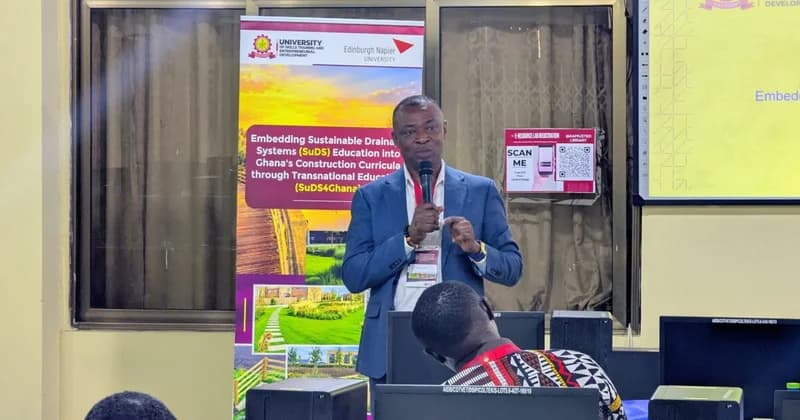
Professor Isaac Boateng has called for the development of sustainable drainage solutions specifically designed to address Ghana’s unique urbanization and flooding challenges. Speaking at a workshop on Sustainable Drainage Systems (SuDS), the professor emphasized the urgent need to move away from traditional methods and toward more resilient infrastructure. The workshop was organized to enhance Technical and Vocational Education and Training (TVET) and higher education curricula by integrating modern drainage concepts into the academic framework to better prepare future professionals.
During the session, Professor Boateng urged major research funders, including the Ghana Research Fund and the British Council, to prioritize and support studies into localized drainage systems. He argued that current infrastructure is often inadequate for the pace of urbanization, leading to perennial flooding. To combat this, he advocated for managing stormwater as a valuable resource rather than a waste product. Key solutions proposed included the implementation of rain gardens and permeable pavements, which allow water to be absorbed back into the ground naturally rather than overwhelming existing gutters.
The collaboration between various educational institutions focuses on ensuring that future professionals—including engineers, urban planners, and vocational technicians—are equipped with the practical knowledge to tackle drainage issues effectively. By embedding SuDS into the national curriculum, the initiative seeks to foster a new generation of experts capable of designing infrastructure that can withstand the pressures of modern environmental changes and poor existing drainage networks. The professor concluded that indigenous innovation, backed by consistent funding and academic integration, is essential for reducing the impact of seasonal floods across the country.


