Politics
Latest politics stories from Ghana's newsrooms

politics|
Ghanaian Political Landscape Shifts as NDC Opens Regional Nominations and NPP Reorganizes Amidst Economic Criticism
The National Democratic Congress (NDC) has officially launched the next phase of its internal reorganization, opening nominations for the 2026 Regional Executive elections on October 6, 2026. This move follows the party's success in the 2024 elections under President John Mahama. Prospective candidates are required to use a dedicated online portal for nomination payments via mobile money or credit cards, as the party leadership emphasizes membership in good standing and strict adherence to democratic discipline. In the Ashanti Region, the incumbent chairman, Augustus Nana Kwasi Andrews, has already filed for re-election, touting his record of increasing parliamentary seats and setting an ambitious target of 35 seats for the 2028 cycle. Other figures, such as Mahmud Kabore and Jonathan Abdallah Salifu, have also signaled their intentions to contest regional positions, with Salifu notably making headlines for providing medical support to his NPP counterpart following an accident. Simultaneously, the opposition New Patriotic Party (NPP) is navigating a period of introspection and leadership transition following their departure from the presidency in early 2025. Political scientists have warned that the party faces a risk of disintegration if it fails to rebuild unity and reconnect with its grassroots supporters, particularly in its stronghold of the Ashanti Region. Despite these challenges, the NPP recently concluded national youth organizer elections where Abanga Fusaini Yakubu emerged victorious. In a unique display of Ghanaian political dynamics, Yakubu's twin brother, Alhassan, serves as a National Vice Chairman for the rival NDC. Yakubu has publicly affirmed his loyalty to the NPP, stating that family ties will not compromise party strategies. Meanwhile, the NPP's Third Vice Chairperson, Nana Akomea, indicated that the party remains open to reconciling with former presidential aspirant Kennedy Agyapong, pending a report from the disciplinary committee. In Parliament and local governance, tensions remain high regarding developmental projects and the rule of law. Minority Leader Alexander Afenyo-Markin has urged the Mahama administration to provide clarity on the stalled National Cathedral project, suggesting it be viewed as a national landmark and tourist attraction rather than solely a place of worship. During a meeting with the Christian Council, Afenyo-Markin also raised concerns about recent arrests related to free speech, advocating for civil rather than criminal remedies for defamation. These legislative concerns are mirrored by a localized but intense rift in Tema, where Tema Central MP Charles Forson and Tema Mayor Ebi Bright are locked in a dispute over District Assemblies Common Fund allocations and building permits. The conflict has escalated to include allegations of assault against the mayor’s driver, which Forson has categorically denied while petitioning the Minister of Local Government for intervention. As the nation approaches the second year of President Mahama’s current term, economic debates continue to dominate the political discourse. MP Charles Forson has claimed that rising fuel and food prices are causing some voters to regret the change in government, though the NDC maintains its focus on its 24-hour economy initiative and accountability measures. Mustapha Gbande, NDC Deputy General Secretary, recently emphasized that the party would not shield any official found embezzling state funds. Beyond the major parties, Dr. Hassan Ayariga of the APC has challenged the Bank of Ghana over the legal basis for arresting individuals using cedi notes in gift bouquets, while the Peasant Farmers Association has called for an urgent resolution to an impasse between the Finance and Agriculture ministries. These developments reflect a vibrant, if contentious, political atmosphere as Ghana’s leaders position themselves for the challenges of the 2028 electoral cycle.

politics|
Chief Justice Baffoe-Bonnie, Sophia Akuffo, and Prof. Mike Oquaye Lead Calls for Fundamental Judicial and Constitutional Reforms
Chief Justice Paul Baffoe-Bonnie has marked the commencement of Ghana’s 69th Legal Year by urging the judiciary to prioritize strengthening the foundations of justice over mere procedural reforms. Speaking at a special service that also celebrated the 150th anniversary of the Supreme Court, the Chief Justice—who signaled his imminent retirement from the bench—emphasized that public confidence is earned through fair treatment and accessibility. This call for institutional integrity was echoed by former Chief Justice Sophia Akuffo at an Institute of Economic Affairs (IEA) forum, where she advocated for urgent constitutional reforms to empower citizens in local governance, particularly those in rural areas who remain largely excluded from centralized decision-making processes. Complementing these calls for systemic change, Professor Aaron Mike Oquaye, former Speaker of Parliament, has expressed strong opposition to the creation of special tribunals for criminal cases. He argued that such structures undermine the principle of equality before the law, insisting that all citizens must be tried in ordinary courts to prevent an improper expansion of prosecutorial powers. Legal expert Dr. Noah Ephraim Tetteh Adamtey further stressed that the constitutional reform process must not be dictated solely by the government. Speaking at a CDD-Ghana event, he called for broader stakeholder participation, including political parties, civil society, and the media, to ensure amendments reflect national interests rather than narrow political agendas. Beyond institutional structures, the quality of political discourse and national security remains a central concern for religious and civil leaders. Archbishop Charles Agyinasare recently condemned the normalization of insults in politics, warning that the younger generation is being negatively influenced by the abusive language used by public figures. In a similar vein, Professor Oquaye urged political parties to dismantle vigilante and 'machoism' groups, asserting that the state must retain its monopoly on security to prevent escalating violence. This climate of scrutiny was underscored by the 'Democracy in Progress' group, which petitioned the Supreme Court to ensure that investigations into politically exposed persons follow strict due process, maintaining that lawful accountability is a pillar of democracy rather than a form of persecution. The push for reform extends into specialized sectors, with Dr. Zanetor Agyeman-Rawlings, Minister for Environment, Science and Technology, advocating for predictable biotechnology regulations to foster innovation and attract investment. Simultaneously, the Ghana Institute of Architects has proposed making adequate housing a human right through the establishment of a Ghana Housing Authority. These diverse calls for reform—ranging from judicial ethics to sector-specific policies—reflect a broader national demand for accountability and service-oriented leadership. As the nation progresses, the success of these initiatives will depend on the willingness of the ruling elite to prioritize collective well-being and the rule of law over personal interest.

politics|
Iran Demands US Concessions Amid Rising Regional Tensions and Brazil’s Polarized Presidential Election
Global geopolitical tensions have intensified as Iran's Parliamentary Speaker, Mohammad Bagher Ghalibaf, set seven specific preconditions for reopening the Strait of Hormuz to the United States. Communicated through Qatar, the demands include the lifting of sanctions, an end to the U.S. naval blockade of Iranian ports, the release of frozen assets, and the cessation of military actions against Iran and its allies. This hardline stance comes as Tehran executed Alireza Sepahi and Alireza Raeisi, who were convicted of killing four police officers during protests in Isfahan—unrest the Iranian government has characterized as a foreign-backed coup. Ghalibaf emphasized that the era of unilateral demands is over, suggesting a seven-day roadmap for the U.S. to comply before any negotiations for a comprehensive agreement can begin. In the United States, Donald Trump has drawn sharp rebukes from California officials after suggesting at a campaign rally that Iran could "take out" Los Angeles and San Diego. Governor Gavin Newsom described the remarks as "deranged and dangerous," while LA Mayor Karen Bass viewed them as a direct threat, prompting Newsom to order the State Threat Assessment Center to monitor potential risks. The White House defended the comments, asserting they were intended to highlight the security risks posed by a nuclear-capable Iran. Amidst this controversy, Trump also announced he would stop using taxpayer funds for "Patriotic Ads," opting instead to fund his promotional efforts through the MAGA Inc super PAC following bipartisan criticism over the potential misuse of government resources. Meanwhile, Brazil is gripped by a highly polarized presidential election featuring incumbent leftist Luiz Inácio Lula da Silva and right-wing Senator Flávio Bolsonaro. With 159 million citizens eligible to vote, the campaign has focused on crime, the role of the state, and international relations. Analysts anticipate that neither frontrunner will secure an outright majority, making a run-off election on October 25 highly likely. This electoral tension mirrors broader regional instability, as Yemen’s Houthi movement recently declared Saudi Arabian airspace "unsafe" for commercial airlines. The Houthis cited escalating airstrikes and their own territorial gains near the Bab al-Mandab Strait as factors that could threaten civilian aviation in the region. In Africa, the political landscape remains fraught with legal and diplomatic challenges. Winnie Byanyima, the executive director of UNAIDS, has publicly refuted claims that negotiations are underway for the release of her husband, Ugandan opposition figure Dr. Kizza Besigye. Besigye currently faces treason charges, which Byanyima has characterized as state persecution rather than a legitimate legal process. These diverse international developments—from the vital shipping lanes of the Middle East to the polling stations of South America—underscore a period of significant friction where domestic political survival increasingly intersects with global security and economic stability.
Only From Anansi
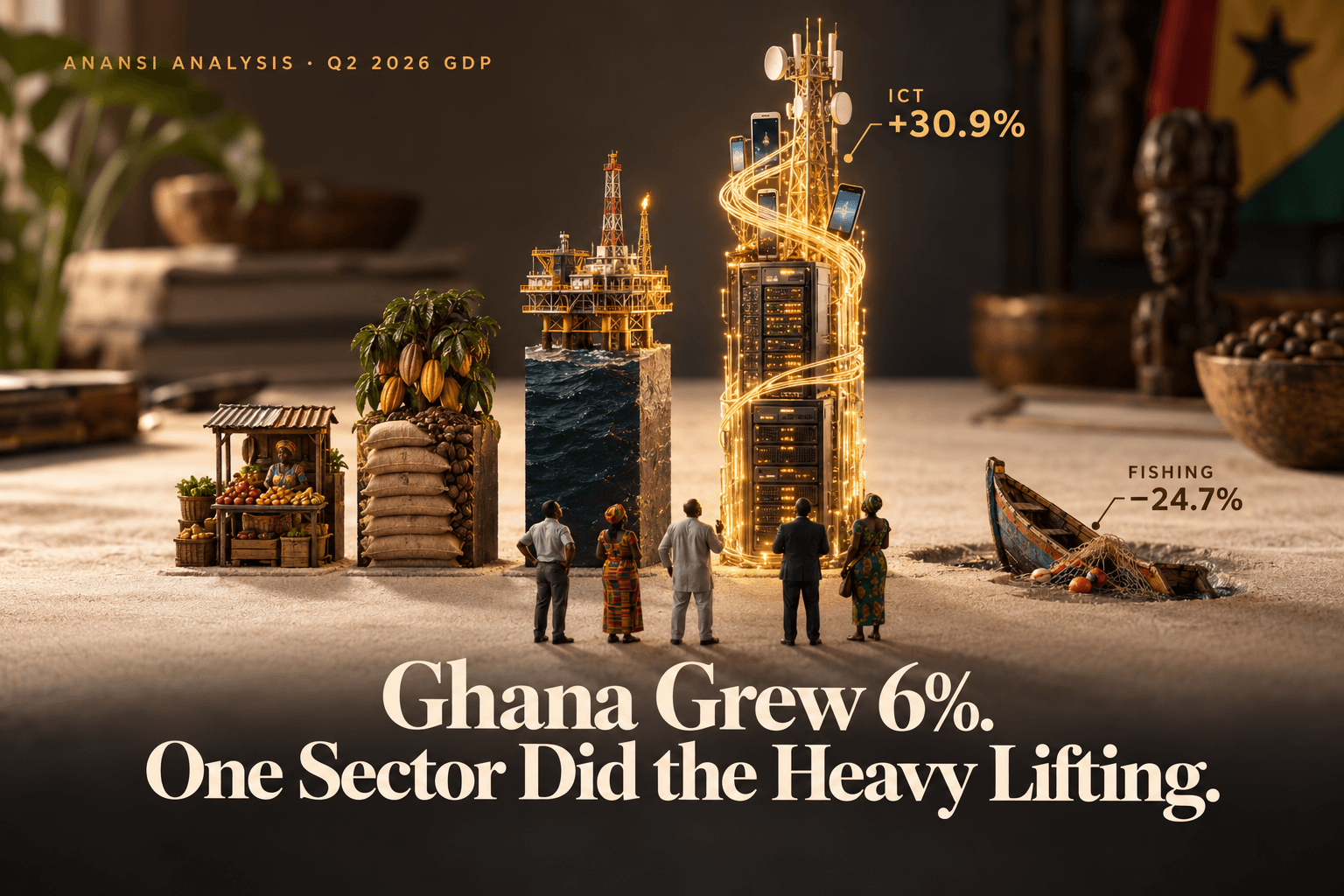
Understanding Ghana's Q2 2026 GDP Figures: What the Numbers Really Mean
Beyond the headline growth rate: a granular look at agriculture, manufacturing and services in Ghana's Q2 2026 GDP report, plus a year-end temperature check.
26 September 2026 · 11 min read
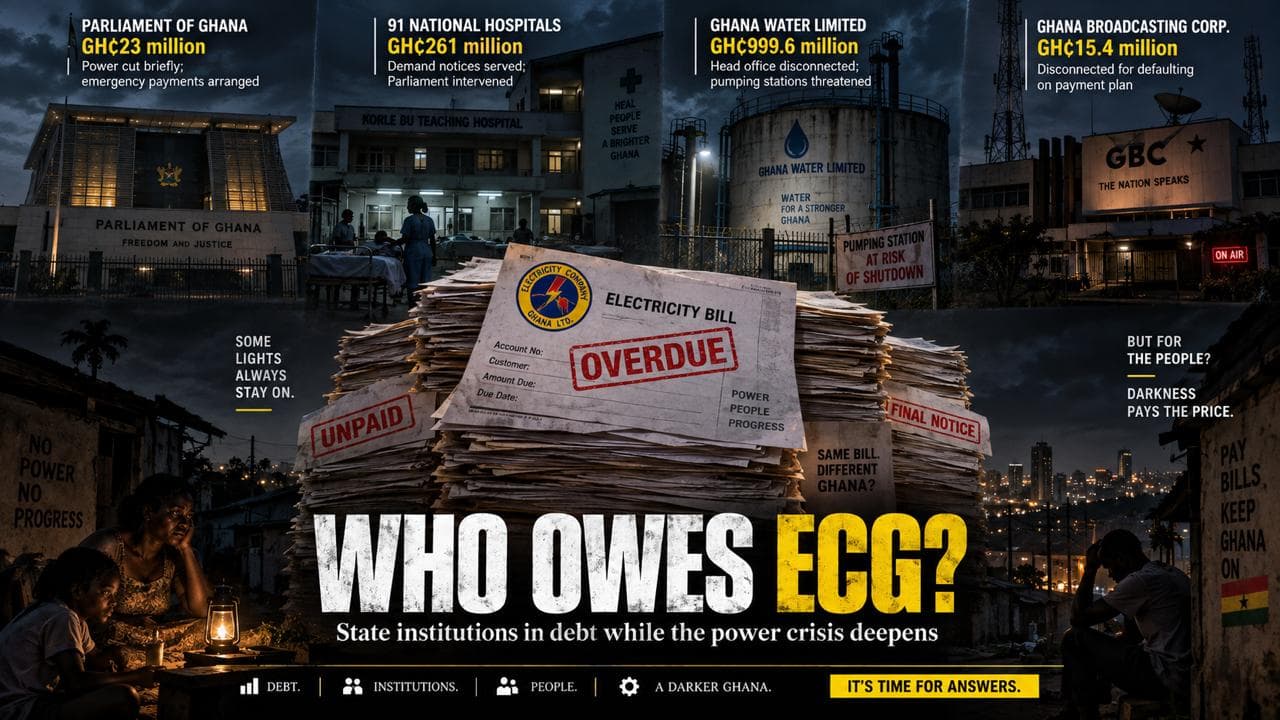
Ghana's Electricity Crisis Is Really a Revenue-Conversion Crisis: What the Evidence Says About ECG
ECG sells around GH¢22 billion of power but spends roughly GH¢35 billion buying and delivering it. Audited accounts, IMF assessments and World Bank reviews show the real problem is not generation, but converting electricity into cash.
1 September 2026 · 25 min read
About Anansi News
Anansi News is a daily home for the latest Ghana news. Our AI reads across Ghana's leading newsrooms and summarizes what matters, so you can follow politics, business, sports, and entertainment in one place without the noise.
We cover national developments and regional coverage from Accra, Kumasi, and beyond, and readers in Ghana and across the diaspora rely on us to stay close to home.