••
Isaac Boateng calls for research into locally suited drainage solutions
•2 min read•1 source
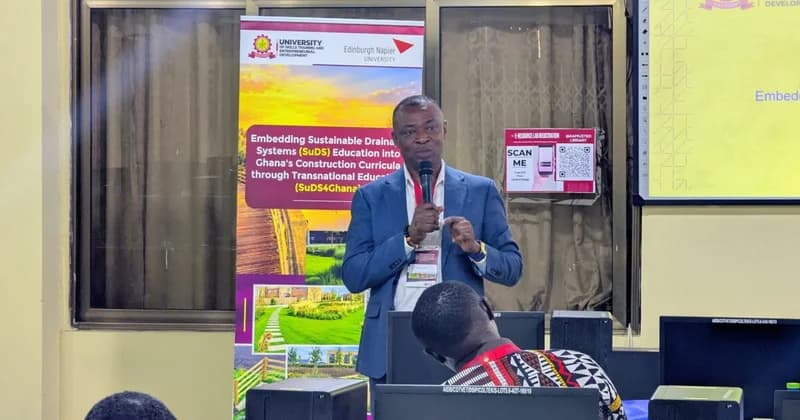
Professor Isaac Boateng of the Akenten Appiah-Menka University of Skills Training and Entrepreneurial Development (AAMUSTED) has emphasized the need for sustainable drainage solutions tailored to Ghana’s specific urbanization challenges. Speaking during a workshop focused on enhancing technical education curricula, he underscored the necessity of moving beyond traditional drainage methods to address the country's growing infrastructure needs. The session addressed the persistent challenges of urban flooding and the current limitations of drainage infrastructure in rapidly expanding cities.
The workshop centered on the integration of Sustainable Drainage Systems (SuDS) into Ghanaian Technical and Vocational Education and Training (TVET) and higher education programs. Professor Boateng advocated for a paradigm shift where stormwater is managed as a resource rather than a waste product. He proposed the implementation of nature-based solutions, such as rain gardens and permeable pavements, which mimic natural processes to manage urban runoff more effectively and reduce the pressure on existing gutter systems.
To support these innovations, Boateng called upon major funding bodies, including the Ghana Research Fund and the British Council, to invest in research projects that explore the local applicability of these drainage technologies. He noted that while global models for sustainable drainage exist, Ghana requires evidence-based solutions that account for its unique soil types, rainfall patterns, and urban density. This targeted research is seen as essential for developing a resilient, long-term framework for stormwater management.
The overarching goal of the initiative is to ensure that future professionals in the construction and urban planning sectors are well-equipped to tackle drainage issues through modern engineering practices. By embedding SuDS principles into the national curriculum, the collaboration between academic institutions and research partners aims to foster a new generation of experts capable of mitigating the recurring flooding that affects many Ghanaian urban centers, thereby protecting both lives and property.

