••
HERALD Initiative establishes unified health and education framework
•2 min read•1 source
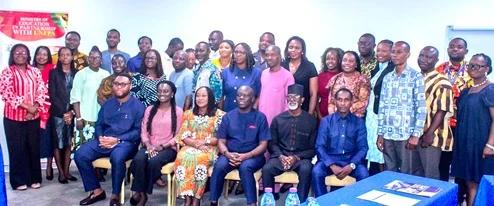
The Healthy Educated and Responsible Adolescents Living and Development (HERALD) Initiative has been launched in Ghana to bridge the gap between education and health policies for school-age children. This collaborative effort aims to create a unified framework that ensures adolescents, particularly those aged 10 to 14, receive consistent quality education, vital health information, and essential developmental services. By synchronizing the efforts of multiple sectors, the initiative seeks to eliminate the fragmentation that has historically hindered comprehensive support for young people.
Lead Facilitator Michael Adorayi Amenah explained that the framework is built upon four critical pillars: application, services, support, and adaptation. These pillars are designed to establish common standards and clear institutional responsibilities, which in turn will enhance coordination and accountability among the various stakeholders involved. The initiative focuses on moving beyond academic achievement to equip youth with broader life skills. Isaac Atta-Baah from the Ministry of Education emphasized this shift, noting the importance of fostering leadership, citizenship, and life skills alongside traditional schooling to prepare adolescents for adulthood.
A primary driver of the HERALD Initiative is the need for formal referral pathways between the Ghana Health Service (GHS) and the Ghana Education Service (GES). Sharifa Mohammed from the GHS highlighted existing barriers that prevent students from accessing necessary reproductive health services and child protection measures. The new framework intends to resolve these issues by creating a seamless transition for health and protection concerns, ensuring that school-based programs are integrated with professional healthcare providers for continuity of care.
The successful implementation of this unified framework is expected to provide a more holistic support system for Ghanaian schoolchildren. By addressing the specific needs of the 10-to-14 age group, the HERALD Initiative aims to create a structured environment where health and education are not treated as separate silos but as complementary components of child development. Moving forward, stakeholders will focus on refining these referral systems and ensuring that the newly established standards are consistently applied across all platforms.
Related topic
Ghana Education Service (GES): Latest News Today →

