••
Zanetor Agyeman-Rawlings urges human oversight of AI in journalism
•2 min read•2 sources
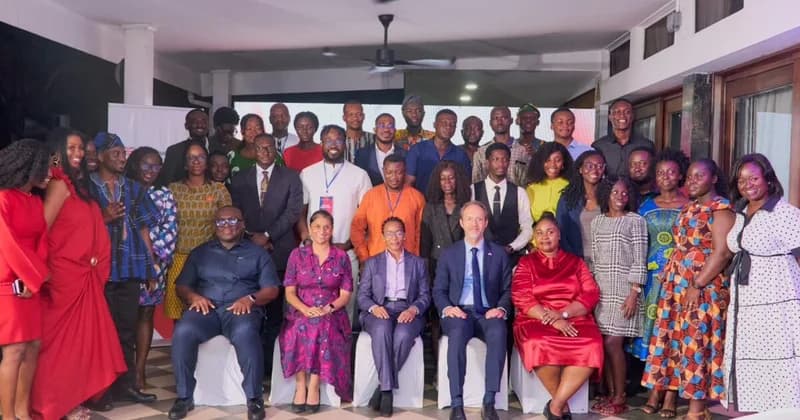
Thirty Ghanaian journalists have successfully completed the UK Media Excellence for Emerging Technologies (UK MEET) Fellowship, a program designed to enhance science and technology reporting in Ghana. At the closing ceremony of the initiative, the Minister for Environment, Science, and Technology, Dr. Zanetor Agyeman-Rawlings, emphasized the urgent need for robust human oversight and governance to manage the rapid advancement of artificial intelligence (AI). She warned that while technology offers significant tools, it must not be allowed to overshadow human judgment or accountability in critical fields like journalism and the arts.
During her address, Dr. Agyeman-Rawlings specifically highlighted the potential impact of AI on both the media and the music industry. She proposed the implementation of transparent labeling for AI-generated content and even suggested the creation of separate music charts to ensure human artists remain visible and protected. Professor Eric Opoku Mensah, Vice-Chancellor of UniMAC, supported these calls, urging journalists to maintain their editorial independence and critically examine technological claims to ensure that public discourse remains grounded in accuracy and accountability.
The fellowship was a collaborative effort between Imperial Global and the British High Commission in Ghana, aligning with the broader UK-Ghana Science, Technology and Innovation (ST&I) Strategy. Over the course of the training, participants engaged with researchers and visited institutions such as the Council for Scientific and Industrial Research (CSIR) and Environment 360. The curriculum covered a range of emerging issues, including artificial intelligence, climate change, and various digital reporting tools, aimed at bridging the gap between scientific research and the general public.
As the program concludes, a selected 10-member group of the participants will travel to Imperial College London for an exchange program to further refine their skills and build international professional networks. British High Commissioner Dr. Christian Rogg noted that the initiative is part of a wider effort to bolster the media-science relationship in West Africa, with similar programs being implemented for journalists in Nigeria to support evidence-based decision-making across the region.
