••
Zanetor Agyeman-Rawlings calls for human oversight in AI development
•2 min read•2 sources
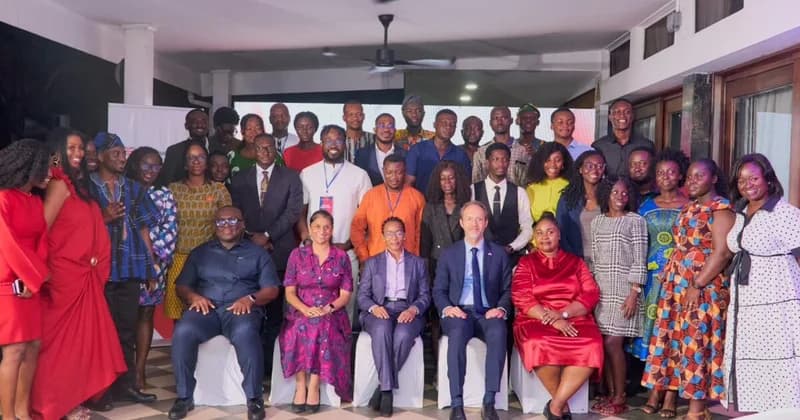
Minister of Environment, Science and Technology Dr. Zanetor Agyeman-Rawlings has advocated for mandatory human oversight and governance in the development of artificial intelligence (AI). Speaking at the closing of the 2026 UK Media Excellence for Emerging Technologies (MEET) Fellowship, she highlighted the urgent need to protect human judgment and accountability in fields increasingly influenced by automation. The ceremony concluded a training program for 30 Ghanaian journalists that focused on emerging technologies, climate change, and digital tools to enhance science communication in the country.
During her address, Dr. Agyeman-Rawlings specifically addressed the impact of AI on the music and journalism sectors. She called for the implementation of transparent labeling for AI-generated music and suggested the creation of separate charts to preserve the visibility and viability of human artists. Professor Eric Opoku Mensah, Vice-Chancellor of the University of Media, Arts and Communication (UniMAC), supported this stance, urging media professionals to maintain editorial independence and critically scrutinize technological claims. These measures are seen as essential to preventing the rapid advancement of AI from overshadowing traditional human roles and ethical standards.
The fellowship, organized by Imperial Global and the British High Commission in Ghana, aligns with the UK-Ghana Science, Technology and Innovation (ST&I) Strategy. Throughout the initiative, participants engaged directly with researchers and visited facilities such as the Council for Scientific and Industrial Research (CSIR) to better understand scientific concepts. As a follow-up to the local training, ten selected journalists will participate in an exchange program at Imperial College London. This initiative is designed to strengthen the media-science relationship in Ghana, ensuring that public discourse is informed by evidence-based reporting and international best practices.
