••
Zanetor Agyeman-Rawlings calls for human oversight of artificial intelligence
•2 min read•2 sources
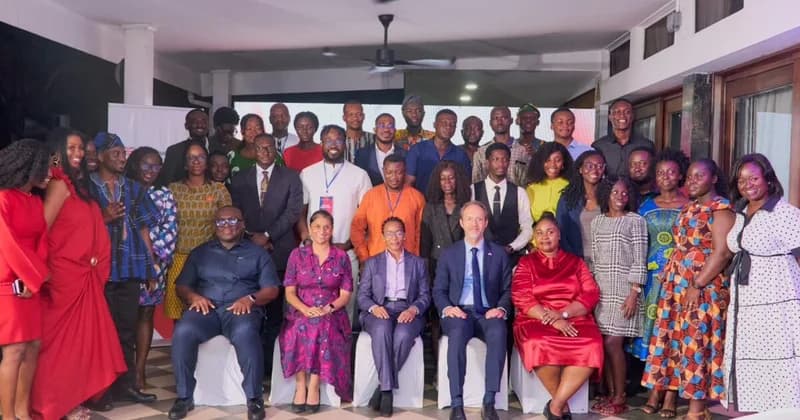
Minister of Environment, Science and Technology, Dr. Zanetor Agyeman-Rawlings, has called for robust human oversight and governance of artificial intelligence (AI) to protect human judgment and accountability. Speaking at the closing ceremony of the UK Media Excellence for Emerging Technologies (MEET) Fellowship, she emphasized that while technology advances rapidly, it must not be allowed to overshadow the essential roles of professionals in journalism and the creative arts. The Minister noted that as AI becomes more integrated into daily life, legal and ethical frameworks must evolve to ensure that human agency remains at the center of decision-making.
Dr. Agyeman-Rawlings highlighted specific concerns regarding the music industry and media, suggesting that transparent labeling for AI-generated content is necessary for accountability. She proposed the creation of separate charts for AI-generated music to ensure that human artists maintain their visibility and are not unfairly disadvantaged by automated productions. In the field of journalism, she urged practitioners to guard their editorial independence and protect the integrity of human judgment against the potential risks of AI-driven misinformation or the erosion of traditional reporting standards.
The event marked the conclusion of a training program for 30 Ghanaian journalists, initiated by Imperial Global and the British High Commission in Ghana. The fellowship, which aligns with the UK-Ghana Science, Technology and Innovation (ST&I) Strategy, provided participants with hands-on experience at the Council for Scientific and Industrial Research (CSIR) and Environment 360. Supporting the Minister’s call, Professor Eric Opoku Mensah, Vice-Chancellor of the University of Media, Arts and Communication (UniMAC), stressed that journalists must critically examine technological claims and maintain high standards of accountability.
To build on the success of the fellowship, a group of ten participants has been selected for an exchange program at Imperial College London, where they will further refine their skills in reporting on emerging technologies. British High Commissioner Dr. Christian Rogg emphasized that such initiatives are vital for bridging the gap between scientific research and public understanding, ultimately supporting evidence-based decision-making in Ghana. The program is part of a broader regional effort to enhance science journalism, with similar initiatives being implemented for media professionals in Nigeria.
