••
Trump Threatens EU with Heavy Tariffs Over Canada Partnership Amid Growing Global Diplomatic Tensions
•3 min read•9 sources
U.S. President Donald Trump has warned the European Union of severe financial penalties, including steep tariffs, following a proposal for Canada to become the bloc's first "associate member." The initiative, introduced by European Commission President Ursula von der Leyen during a state of the union address in Strasbourg, aims to strengthen economic resilience and energy security between Canada and Europe. While Canadian Prime Minister Mark Carney has welcomed the proposal, emphasizing that middle powers are "stronger together," the concept faces significant legal hurdles as associate membership is not currently recognized under EU law. Trump has characterized the move as a potentially hostile act, further straining trade relations after Carney rejected suggestions that Canada should instead seek to become the 51st state of the U.S.
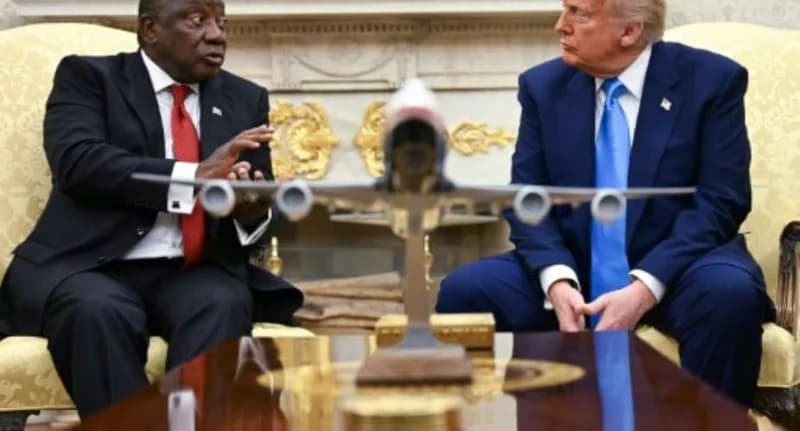
This friction in the West is mirrored by a significant deterioration in U.S.-South Africa relations, where the Trump administration has imposed visa restrictions on South African officials. The restrictions are based on allegations of discrimination against the white minority, specifically regarding the 2025 Expropriation Act and Broad-Based Black Economic Empowerment (B-BBEE) policies. While South African authorities argue these measures are necessary for social reform and represent a misinterpretation of national law, the diplomatic rift has driven South Africa closer to other global powers. This was evidenced by a meeting between President Cyril Ramaphosa and Russian President Vladimir Putin at the 18th BRICS Summit in New Delhi, where both leaders reaffirmed a strategic partnership ahead of an upcoming Russia-Africa Summit. However, leadership stability remains a concern as Ramaphosa recently withdrew from public engagements due to ill health.
Internal pressures are also mounting within the United Kingdom, where residents of Piddington, a village in Oxfordshire, held a symbolic referendum to leave the UK. In a 285 to 26 vote, the community declared itself the "Principality of Piddington" in protest against government plans to house 1,256 male asylum seekers at a nearby military base. While Prime Minister Andy Burnham defended the national asylum strategy as a necessary measure to manage a backlog of claims, local leaders criticized a lack of transparency and cited safety concerns. This grassroots rebellion highlights a growing disconnect between local autonomy and national migration policy that is resonating across various British communities.
Regional instability continues to affect West Africa and the Middle East, with The Gambia facing widespread business closures and protests against President Adama Barrow due to prolonged power blackouts. Local fishmongers in Tanji have reported significant losses, complicating Barrow's bid for re-election as citizens demand immediate infrastructure improvements. Conversely, a diplomatic breakthrough was achieved between Israel and Morocco, as the two nations agreed to upgrade their relations by opening full embassies following talks in New York. These shifting alliances, alongside personal controversies such as the recent claims in Earl Spencer’s memoir regarding the Royal Family's response to Princess Diana's death, underscore a period of profound transformation and friction in global political institutions.


