••
President Mahama’s Cabinet Approves Ghana’s Formal Application to Join BRICS Amid Strengthening Ties with India
•2 min read•8 sources
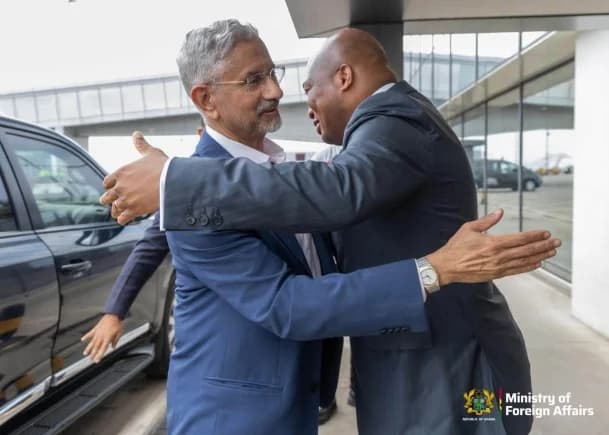
Ghana’s Cabinet has officially approved a bid for the country to join BRICS, the influential bloc of emerging economies comprising Brazil, Russia, India, China, and South Africa. The decision was announced on October 6, 2026, by the Minister of Foreign Affairs, Samuel Okudzeto Ablakwa, during a joint press briefing with the visiting Indian Minister for External Affairs, Dr. Subrahmanyam Jaishankar, in Accra. This strategic move is a cornerstone of President John Mahama’s 'New Economy' initiative, which seeks to diversify Ghana’s international partnerships and accelerate transformative economic growth through deeper integration with the Global South.
Minister Ablakwa emphasized that seeking BRICS membership is part of a broader foreign policy shift toward resource sovereignty and a multipolar international system. While the government aims to expand its development options through the bloc, officials stressed that Ghana intends to maintain its long-standing relationships with traditional partners, including the IMF and the World Bank. The application aims to move the country away from a reliance on raw material exports toward value-added industrialization, leveraging the trade and investment opportunities provided by BRICS members who already have significant diplomatic and economic footprints in Ghana.
Concurrent with the BRICS announcement, President Mahama held high-level discussions with Dr. Jaishankar to strengthen bilateral cooperation between Ghana and India. The President highlighted a robust growth in trade, noting that Ghanaian exports to India have surged from approximately US$3 billion to nearly US$7 billion. These discussions centered on critical sectors including rail development, ICT, and the pharmaceutical industry. To formalize this cooperation, the two nations signed several Memoranda of Understanding (MoUs) spanning agriculture, healthcare, and science and technology, further cementing a partnership that dates back to Ghana’s independence.
As Ghana prepares its formal application, India has expressed strong support for the nation’s aspirations. The meeting underscored a shared vision for a more equitable global order that discourages unilateralism and addresses common developmental challenges through mutual knowledge exchange. Moving forward, the government expects the BRICS membership to provide greater flexibility in economic decision-making and provide a platform for local manufacturing partnerships, such as vaccine production collaborations already underway with Indian firms. The formal entry process will now depend on the collective consideration of current BRICS member states.
Related topic
John Mahama: Latest News & Updates →

