••
GES Director-General Prof. Smile Dzisi Links Financial Accountability to WASSCE Success Amid Growing Demands for Educational Equity
•3 min read•8 sources
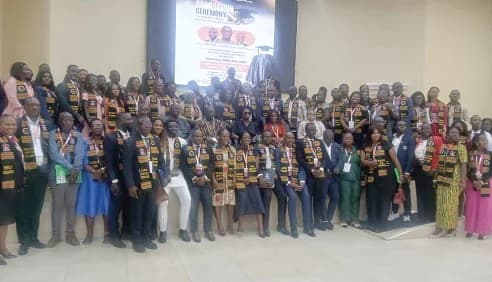
Professor Smile Dzisi, Director-General of the Ghana Education Service (GES), has underscored the critical link between sound financial governance and academic performance in Ghanaian schools. Speaking at a recent workshop for educational accountants and bursars in the Volta Region, Prof. Dzisi revealed that poor financial management contributed significantly to the region's declining WASSCE results, notably citing that 18 schools recorded zero progression rates in 2025. She urged financial officers to act as transparent custodians of public resources, ensuring that funds are strategically deployed to improve teaching and learning outcomes, particularly in core subjects like Mathematics and Integrated Science. This call for accountability coincides with efforts by the Association of Educational Accountants (AEA) to transition to International Public Sector Accounting Standards (IPSAS), emphasizing that robust internal controls and continuous professional development are essential to modernizing public financial management within the sector.
Parallel to these administrative reforms, there is a mounting push for greater inclusivity and fairness in the recruitment of educational and public sector staff. Approximately 400 qualified graduates with disabilities are currently appealing to the government for a separate recruitment clearance system to address long-term unemployment, which some have faced for up to 15 years. Despite a national policy intended to reserve 5% of public-sector roles for persons with disabilities, the Commission of Unemployed Graduates with Disabilities expressed deep disappointment after none of their 200 submitted candidates were selected in the most recent GES recruitment cycle. The Ghana Federation of Disability Organisations (GFD) has further emphasized that Ghana must move beyond merely formulating disability-inclusive policies to ensuring their rigorous implementation, particularly regarding access to education and employment.
Professional development and the evolution of the Ghanaian workforce are also undergoing significant shifts. At the 2026 Annual Conference of the Land Surveying Division of the Ghana Institution of Surveyors, professionals were urged to move beyond traditional mapping to embrace spatial intelligence and artificial intelligence for national planning. Similarly, at a graduation ceremony for 123 students at the Institute of Paralegal Training and Leadership Studies, Dr. Francis Kofi Korankye-Sakyi highlighted the growing importance of Alternative Dispute Resolution (ADR) as a vital component of the justice system and national development. These transitions reflect a broader trend in the Ghanaian labor market, where a 2026 Employee Motivation Survey found that job security and the pursuit of a "dream job" have surpassed salary as the primary motivators for workers, signaling a shift toward career development and safe work environments.
However, the path to academic and professional advancement remains fraught with challenges regarding student support and transparency. The New Ghana Social Justice Forum (NGSJF) recently challenged the adequacy of a 25% tuition fee support initiative offered by MP Baba Jamal for law students in Ayawaso East, arguing that partial coverage should not be labeled a scholarship. The forum is calling for 100% tuition coverage and transparent funding sources to ensure that educational support truly removes barriers for underprivileged students. Collectively, these developments suggest that while the education and professional sectors are modernizing through technology and better accounting practices, the fundamental goals of equity, inclusivity, and transparent resource management remain the most urgent priorities for national progress under the current administration.
Related topic
Ghana Education Service (GES): Latest News Today →

