••
Nigeria confirms first Ebola case in Abuja in over a decade
•2 min read•6 sources
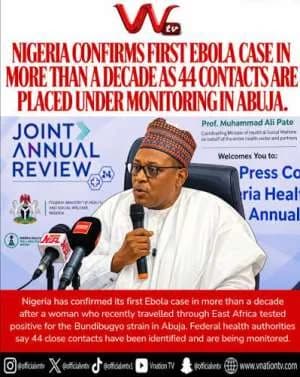
Nigeria has confirmed its first case of Ebola in more than ten years after a 42-year-old woman tested positive for the virus in Abuja on October 20. The patient, a Ugandan-born woman married to a Swiss diplomat, recently returned from Uganda via a layover in Addis Ababa, Ethiopia. Health Minister Muhammad Ali Pate confirmed that the case involves the Bundibugyo strain and emphasized that the patient was quickly placed in isolation after seeking medical attention. While this marks the first confirmed incident in Nigeria since 2014, authorities have moved to reassure the public that the situation is currently contained to a single, imported case.
Health officials have identified 44 individuals who came into contact with the patient and are monitoring them closely for symptoms. The patient’s husband is also in isolation, though he has not shown symptoms of the disease. The Swiss embassy in Abuja remains operational as officials determined that general staff do not require isolation. The World Health Organization (WHO) is collaborating with Nigerian authorities to investigate the source of the infection, including a potential link to an Ebola-related death in Kenya, suggesting the patient may have been exposed during travel at an airport in Uganda.
In response to the confirmed case, Nigeria has intensified health screening protocols at major entry points, including Lagos airport, where international arrivals are now undergoing mandatory temperature checks. The Bundibugyo strain is particularly challenging for health systems because there is currently no licensed vaccine, making early detection and supportive treatment the primary means of management. This development occurs amid a broader regional crisis, with the Democratic Republic of the Congo reporting over 9,600 cases and thousands of deaths in a fast-spreading outbreak.
Nigerian health authorities are urging citizens to remain calm but vigilant as they ramp up surveillance and genomic sequencing efforts. The swift isolation of the patient and the commencement of contact tracing are seen as critical steps in preventing the virus from spreading into the wider community. As the most populous country in Africa, Nigeria’s ability to contain the outbreak is viewed as vital for regional health security, highlighting the ongoing need for robust emergency preparedness and cross-border cooperation in East and West Africa.
gbcghanaonline.com
PrimaryhealthWoman with Ebola in Nigeria confirmed as wife of Swiss diplomat
myjoyonline.com
healthWoman with Ebola in Nigeria confirmed as wife of Swiss diplomat
modernghana.com
healthNigeria Confirms Imported Ebola Case as Authorities Intensify Containment Efforts
myjoyonline.com
healthNigeria says Ebola case remains isolated, urges calm
ghanaweb.com
healthWHO warns ‘more complex’ Ebola outbreak now present in 3 African countries
ghanaweb.com
healthNigeria steps up airport health screenings over Ebola fears

