••
President Mahama Suspends Chief Justice Torkornoo Amid Intense Debate Over Judicial Independence and Constitutional Reform
•3 min read•11 sources
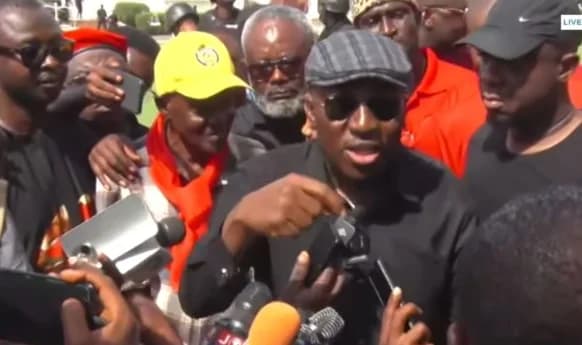
President John Mahama has suspended Chief Justice Gertrude Torkornoo, triggering a significant national debate over judicial independence and constitutional due process. The suspension follows the establishment of a prima facie case against the Chief Justice based on three petitions for her removal, a move the Third Force Alliance—a coalition of five minority political parties—has lauded as a constitutional necessity under Article 146. While supporters of the President’s decision emphasize the importance of accountability and the adherence to legal mandates, the opposition New Patriotic Party (NPP) has condemned the move, resulting in 'Save the Judiciary' protests. During these demonstrations, Minority Leader Alexander Afenyo-Markin reported being assaulted by a police officer, an incident currently under investigation by the Criminal Investigations Department (CID).
In the wake of the suspension, Justice Paul Baffoe-Bonnie has assumed the role of Acting Chief Justice. His appointment was recently affirmed by the Supreme Court, a ruling supported by the Progressive People’s Party (PPP) as a victory for the 1992 Constitution. However, the transition has not been without friction. Retired Supreme Court Justice William Atuguba has defended President Mahama’s actions, dismissing the NPP’s 'selective outrage' and noting that the suspended Chief Justice was granted sufficient time to respond to the allegations. Conversely, Justice Atuguba also warned against politically motivated judicial appointments, urging for merit-based selections to protect the judiciary’s credibility from being undermined by executive influence.
The Ghana Bar Association (GBA) has also entered the fray, with its President, Mrs. Efua Ghartey, calling for higher professional standards and reasonable bail conditions to restore public confidence in the justice system. The GBA's stance has drawn criticism from Deputy Attorney-General Dr. Justice Srem-Sai, who accused the association of inconsistent standards in its scrutiny of Chief Justice Baffoe-Bonnie’s recent remarks. Amid these tensions, prominent voices like former Speaker of Parliament Prof. Aaron Mike Oquaye have advocated for the removal proceedings to be televised live, arguing that transparency is essential to maintain public trust in the face of historical injustices and current political polarization.
Beyond the immediate crisis in the judiciary, the Mahama administration is facing broader calls for institutional reform. Special Prosecutor Kissi Agyebeng has proposed that the Office of the Special Prosecutor (OSP) be constitutionally entrenched and granted financial independence to insulate it from political interference. Simultaneously, the Inter-Ministerial Coordinating Committee on Decentralisation has inaugurated a Legislative Review Committee, chaired by Prof. Kwamena Ahwoi, to harmonize Ghana’s local governance laws. These developments suggest that the suspension of Chief Justice Torkornoo is part of a larger, evolving dialogue regarding the balance of power, the integrity of state institutions, and the enduring nature of Ghana’s democratic framework.
Related topic
NPP (New Patriotic Party): Latest News →
