••
Legal Experts and Civic Groups Demand Greater Accountability and Inclusive Constitutional Reforms
•3 min read•3 sources
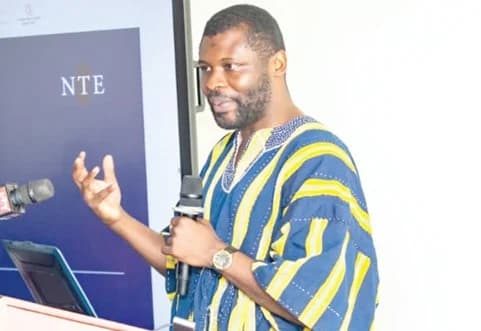
In a series of calls for institutional reform, legal experts and civil society groups in Accra have stepped up demands for greater accountability of politically exposed persons and a more inclusive approach to amending Ghana’s 1992 Constitution. During a demonstration organized by the group "Democracy in Progress," Legal Adviser Andrew Appiah-Dankwa emphasized that lawful investigations into the conduct of public officials should be viewed as a strengthening of democracy rather than political persecution. Dressed in white to symbolize peace, the group presented a petition to the Supreme Court, asserting that "Accountability Today, Integrity Tomorrow" is essential for national stability. Judicial Secretary Musah Ahmed received the petition on behalf of the Chief Justice, assuring the demonstrators that their call for "one law for all Ghanaians" would be formally considered.
Parallel to the calls for judicial accountability, a debate has emerged regarding the methodology for constitutional amendments. Private legal practitioner Austin Brako-Powers has publicly challenged the New Patriotic Party’s (NPP) proposal to establish a consultative assembly for this purpose. Brako-Powers argued that the scale of proposed changes does not necessitate an entirely new assembly, as the 1992 Constitution already provides a robust framework for its own amendment. He stressed that while a platform for dialogue among the government, opposition, and civil society is necessary to resolve disagreements before public presentation, the existing constitutional provisions are sufficient to manage the process without the delays of an additional bureaucratic body.
Adding to the discourse on reform, Dr. Noah Ephraim Tetteh Adamtey urged for broader stakeholder participation during a media engagement hosted by the Centre for Democratic Development (CDD-Ghana). Dr. Adamtey highlighted that the recommendations from the Constitution Review Commission (CRC) should not be dictated solely by the government’s stance. Instead, he called for a collaborative approach involving political parties, Parliament, and civil society organizations. A significant portion of this reform agenda includes strengthening media independence. Experts at the event, including Abdulai Awudu and George Wilson Kingson, advocated for constitutional protections for media institutions, the passage of a Broadcasting Bill, and clear guarantees regarding the tenure of state media editors to insulate them from political interference.
These converging demands reflect a growing consensus among Ghana’s legal and civic communities on the need for transparent, equitable governance. Whether through the prosecution of politically exposed persons or the structural reform of the nation’s foundational law, the core objective remains the same: ensuring that democratic institutions remain resilient and accountable to the citizenry. As the Judicial Secretary and the Constitutional Review Implementation Committee (CRIC) process these various petitions and recommendations, the focus shifts to how the legislature and the administration will balance these calls for reform with the need for national cohesion and legal stability.
Related topic
NPP (New Patriotic Party): Latest News →

