••
MP Kojo Oppong Nkrumah Challenges Judicial Warrants as Ghana Moves Toward Major Constitutional Reforms
•3 min read•9 sources
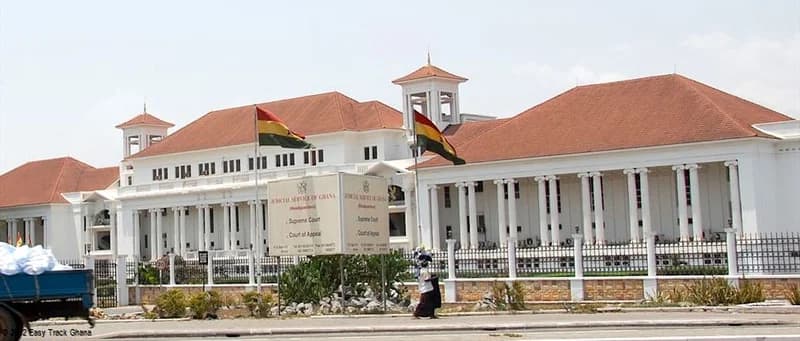
The Ghanaian political and legal landscape is facing significant shifts as the government prepares for a 2027 referendum on constitutional reforms while the Supreme Court deliberates on a high-profile challenge against judicial administrative practices. Dr. Rasheed Draman, Executive Director of the African Centre for Parliamentary Affairs (ACEPA), has formally endorsed the government's stance on the Constitution Review Committee (CRC) report, specifically supporting proposals to allow dual citizens to contest for parliamentary seats. Simultaneously, Ofoase Ayirebi MP Kojo Oppong Nkrumah is leading a legal battle to halt High Court criminal trials during the legal vacation, raising fundamental questions about the right to legal representation and the limits of administrative authority.
The proposed constitutional changes, which include expanding Parliament from 276 to 300 members and abolishing the death penalty, represent a major overhaul of Ghana’s governance framework. Dr. Draman argues that allowing dual citizens to serve in Parliament will inject valuable international experience and professional networks into the nation’s political system. To address concerns regarding divided loyalties, he emphasizes the necessity of strengthening national institutions. Furthermore, the reforms advocate for proportional representation to enhance the inclusion of women and vulnerable groups, with a national referendum slated to coincide with the 2027 District Assembly elections.
In the judicial sphere, the Supreme Court is set to rule on August 21 regarding an application by MP Kojo Oppong Nkrumah to restrain the High Court from conducting criminal trials during the annual legal vacation. Represented by lawyer Frank Davies, the MP argues that administrative warrants issued by the Chief Justice to allow such trials infringe upon the constitutional rights of the accused, particularly their right to a fair trial and access to legal counsel who may be away during the break. The Deputy Attorney-General has countered this, asserting that the Chief Justice's authority to manage the courts does not interfere with judicial discretion and that no irreparable harm has been demonstrated.
Beyond high-level policy and legal disputes, governance issues are manifesting in public administration and housing. The Rent Control Department, led by Acting Commissioner Frederick Opoku, has announced a strict mandate for landlords and hostel operators to issue rent cards and formalize tenancy agreements to prevent unfair pricing, particularly for tertiary students. Non-compliance could result in fines or imprisonment. Meanwhile, property rights have come under scrutiny in Oyarifa, where lawyers for Madam Barbara Boateng are challenging the partial demolition of her residence, alleging a lack of due process despite her holding a valid Land Title.
These developments occur against a backdrop of institutional tension, notably at the Komfo Anokye Teaching Hospital (KATH), where the advertising of a Deputy Director of Public Affairs position—while the incumbent remains in office—has sparked internal confusion. This situation follows the suspension of the hospital's CEO and subsequent strike actions by health workers. Collectively, these events underscore a period of intense scrutiny over institutional transparency, constitutional integrity, and the protection of individual rights under the current administration.

