••
Bank of Ghana Governor Dr. Johnson Asiama Signals Caution as Reserve Pressures Mount Amid Robust 6% GDP Growth
•3 min read•32 sources
Ghana’s economy is demonstrating a significant turnaround in 2026, characterized by a robust 6.0% GDP growth rate in the second quarter and a stabilized, though rising, inflation rate of 5.0% as of August. This recovery has drawn international praise, with business magnate Aliko Dangote and International Finance Corporation (IFC) Managing Director Makhtar Diop commending President John Mahama’s administration for revitalizing investor confidence and fostering a stable macroeconomic environment. Despite this positive momentum, the Bank of Ghana (BoG) remains vigilant as it navigates emerging external and domestic pressures that threaten to complicate the nation’s fiscal trajectory.
During the 132nd Monetary Policy Committee (MPC) meeting held in late September 2026, Governor Dr. Johnson Asiama highlighted a notable decline in gross international reserves, which fell from $12.94 billion in June to $11.4 billion by the end of August. Although reserves rebounded slightly to $12.04 billion by September 22, providing approximately 4.2 months of import cover, the Governor warned of a projected current account deficit for the third quarter. This strain is attributed to a slowdown in gold shipments and an increase in service payments, prompting the MPC to evaluate whether the current 14% policy rate is sufficient to maintain price stability and support ongoing economic activity.
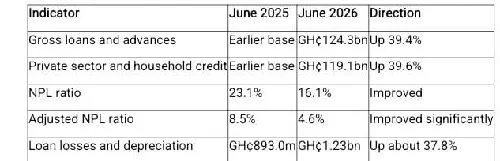
A significant factor impacting the nation’s external position is a pause in gold exports by the Ghana Gold Board (GoldBod) since mid-August 2026. This follows a report detailing a GH¢3.78 billion net supply gap in gold deliveries to the central bank during 2025, where actual supplies of 80.8 tonnes fell short of projected values. While policy analysts have praised GoldBod for its transparency in reporting these variances, the halt in exports has created immediate liquidity concerns. Simultaneously, the banking sector has shown signs of improved health, with the Non-Performing Loan (NPL) ratio dropping from 23.1% to 16.1% over the past year, though banks still recorded GH¢1.23 billion in loan losses in the first half of 2026.
External global shocks are further complicating Ghana’s economic outlook. The ongoing Middle East crisis has driven Brent crude prices to $107 per barrel, increasing energy and fertilizer costs that could exacerbate domestic inflationary pressures. Dr. Asiama noted that while higher gold prices offer a potential boost to export earnings, the strengthening US dollar and tightening global financial conditions are weighing heavily on the cedi. Moving forward, the Bank of Ghana emphasizes the need for disciplined fiscal management and the rebuilding of foreign assets to insulate the economy from these global volatilities and ensure that the current stability translates into long-term prosperity.
Related topic
John Mahama: Latest News & Updates →Live rates
Bank of Ghana policy rate →

