••
PURC Freezes Utility Tariffs for Q4 2026 Amidst Robust Economic Growth and Rising Public Debt
•3 min read•11 sources
The Public Utilities Regulatory Commission (PURC) has announced that electricity and water tariffs will remain unchanged for the fourth quarter of 2026, providing a reprieve for consumers starting October 1. The decision to maintain a 0 percent adjustment follows a comprehensive review of economic indicators, including a 3.04 percent depreciation of the Ghana cedi against the US dollar and a rise in the annual inflation rate to 4.97 percent. Despite these pressures and shifting natural gas costs, the PURC determined that freezing current rates was necessary to balance the financial viability of utility providers with the welfare of Ghanaian households and businesses.
This utility stability comes as the broader economy shows signs of strong recovery under the administration of President John Mahama. Recent data indicates that Ghana’s GDP grew by 6.0 percent in the second quarter of 2026, with inflation cooling significantly to 5.0 percent. Dr. Kofi Nsiah-Poku, President of the Association of Ghana Industries (AGI), recently commended Finance Minister Dr. Cassiel Ato Forson for his role in stabilizing the macroeconomic environment. During meetings to prepare the 2027 Budget, industry leaders emphasized that this stability is crucial for industrial expansion, job creation, and the continued growth of the export sector.
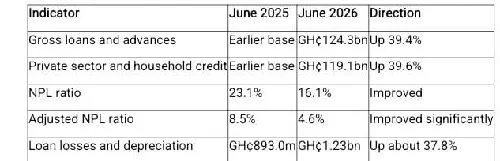
However, the financial landscape remains complex, particularly regarding the national debt and the banking sector. Ghana’s public debt stock rose to GH¢733.9 billion as of July 2026, representing approximately 45.9 percent of the nation's GDP. This increase of GH¢14.4 billion from the previous month was primarily driven by domestic borrowing, which rose to GH¢396.7 billion. While the banking sector has seen its Non-Performing Loan (NPL) ratio improve from 23.1 percent to 16.1 percent over the past year, financial institutions still reported GH¢1.23 billion in loan losses during the first half of 2026, highlighting persistent risks in credit quality.
In the financial markets, lending rates have shown a downward trend, averaging 15.9 percent in August 2026 compared to over 20 percent at the start of the year. The Bank of Ghana has maintained its Policy Rate at 14 percent to anchor inflation expectations. Meanwhile, in the property sector, the State Housing Company Limited (SHC) has issued a 21-day ultimatum for unauthorized occupants of its lands and properties to regularize their status. As the government pivots toward the 2027 fiscal year, the focus remains on sustaining growth while managing the heavy domestic debt burden and ensuring that financial stability translates into long-term industrial prosperity.
Related topic
John Mahama: Latest News & Updates →Live rates
Bank of Ghana policy rate →

