••
Ghana’s 2026 Real Estate Outlook: Navigating Market Growth, New Tax Regimes, and Investment Opportunities
•3 min read•8 sources
Ghana's economy showed resilience in the first quarter of 2026 with a 6.4% GDP growth, fueling a cautiously optimistic real estate market. This momentum was visible at the second JoyNews–Republic Bank Habitat Fair at Marina Mall, where prospective homeowners sought solutions amid rising property values and significant legislative changes. While nominal appreciation for Accra properties hovers between 5% and 8%, specific expansion zones like Oyarifa are seeing surges of up to 18%, signaling a shift in where value is being created. Investors are currently seeing total annual returns ranging from 12% to 18%, indicating strong rental income opportunities despite a cautious economic backdrop characterized by rising inflation.
However, the 2026 landscape presents new hurdles for buyers. The implementation of the VAT Act 2025 has seen rates for registered developers jump from a flat 6% to approximately 20%, significantly impacting the final price of new builds. Combined with stamp duty ranging from 0.25% to 1% and legal fees of 2% to 6%, the sticker price of property is rarely the full story. Furthermore, the Land Act 2020 continues to define ownership, restricting non-citizens to 50-year leaseholds while reserving freehold interests primarily for citizens. Experts at the Habitat Fair, including representatives from Republic Bank, emphasized that navigating these legal and tax complexities requires professional guidance and valid GRA Tax Identification Numbers for all transactions.
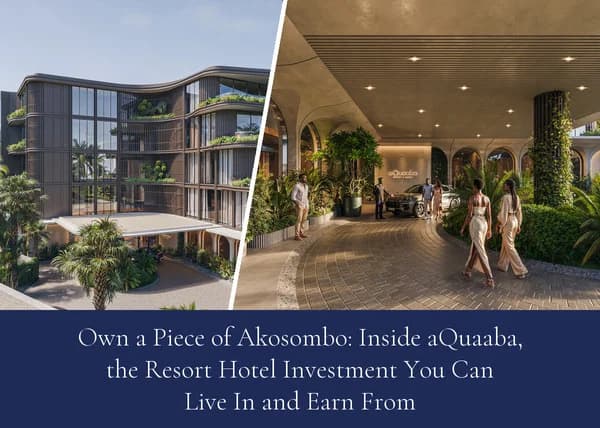
For those looking beyond traditional residential ownership, the aQuaaba resort in Akosombo offers a managed investment model. Starting at $100,500, these units provide a projected 8% to 10% annual return through a revenue-sharing pool, catering to the growing demand for premium leisure near the capital. Beyond individual investments, the broader economy is set for a boost from infrastructure; Dr. Theo Acheampong, Technical Adviser at the Ministry of Finance, recently highlighted that the Accra-Kumasi Expressway could generate up to 70,000 job-years, far exceeding initial conservative government estimates of 30,000 jobs. This project is expected to create significant employment beyond direct construction roles.
As the market matures, the diversity of offerings—from electric mobility solutions and renewable energy featured at the Habitat Fair to luxury hospitality investments—reflects a broadening economic base. While inflation remains a concern for investors, the high rental yields suggest that real estate remains a robust hedge. For both the diaspora and local buyers, the key to success in 2026 lies in balancing the pursuit of high-growth locations with a rigorous understanding of the new fiscal and legal frameworks governing Ghanaian land. Proper documentation and engagement with licensed professionals remain the most critical steps for securing property interests in this evolving market.

