••
Ghana’s Debt Market Sees Surge in Demand as New 4-Year Bond and T-Bills Attract Billions
•3 min read•9 sources
Ghana’s financial markets have demonstrated robust investor confidence as the government successfully auctioned a new four-year Treasury bond, attracting GH¢4.46 billion in bids. Of this amount, the government accepted GH¢3.15 billion at a yield of 12.00%, which falls within market expectations and is significantly lower than recent longer-term debt issuances. The cedi-denominated bond, maturing in September 2030, was open to both resident and non-resident investors and will be listed on the Ghana Stock Exchange. This strong appetite for medium-term securities was mirrored in the Treasury bill market, where an auction for 91-day, 182-day, and 364-day bills was oversubscribed by 51.6%, with investors tendering GH¢9.94 billion against a target of GH¢6.55 billion.
This high liquidity environment is supported by a significant expansion in the money supply. According to the Bank of Ghana’s July 2026 Monetary Policy Report, annual growth in broad money (M2+) surged to 28.5% in June 2026, up from 15.6% the previous year. This growth is largely driven by increases in Net Foreign Assets and credit to the private sector. However, the period also saw a notable rise in domestic debt, which increased by GH¢57 billion between December 2025 and June 2026, bringing the total public debt to GH¢719.5 billion. While debt levels are rising, the falling interest rates across the yield curve—with the 91-day bill dropping to 4.80%—suggest that the market is currently absorbing this supply with ease.
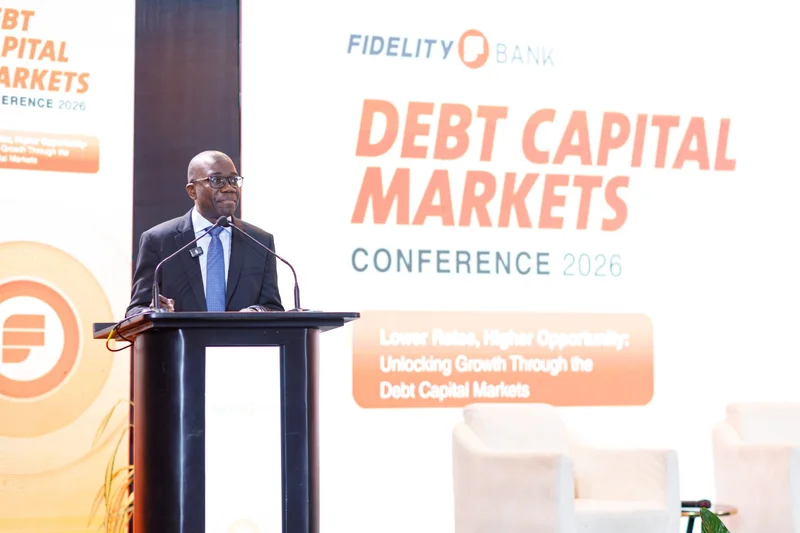
Amidst these fiscal activities, financial leaders are advocating for a transition from short-term economic stabilization to sustainable, long-term growth. At a recent Debt Capital Markets Conference, Fidelity Bank Ghana’s Managing Director, Julian Opuni, emphasized the need for a more sophisticated financing architecture to transform current macroeconomic stability into productive investment capital. This sentiment was echoed by Bank of Ghana officials, who noted that the economy grew by a robust 6.4% in the first quarter of 2026, with inflation seeing a dramatic decline from its 2022 peaks. Stakeholders are now calling for deeper private-sector participation in the debt markets to reduce the historical over-reliance on sovereign issuance.
Despite the success of primary auctions, the secondary bond market experienced a temporary lull, with turnover falling by 68% to GH¢2.12 billion. Analysts suggest this decline was caused by investors shifting focus toward the new four-year bond settlement and unallocated bids from recent auctions. However, the market is expected to recover as liquidity from recent coupon payments and maturities flows back into the system. As Ghana moves from crisis management toward structured debt management, the development of institutional frameworks and the inclusion of diverse funding channels remain critical priorities for ensuring that capital is efficiently directed toward infrastructure and small-to-medium enterprises.
Live rates
Bank of Ghana policy rate →

