••
Ethiopia's Fragile Peace at Risk as Military and TPLF Clashes Intensify in Northern Regions
•2 min read•2 sources
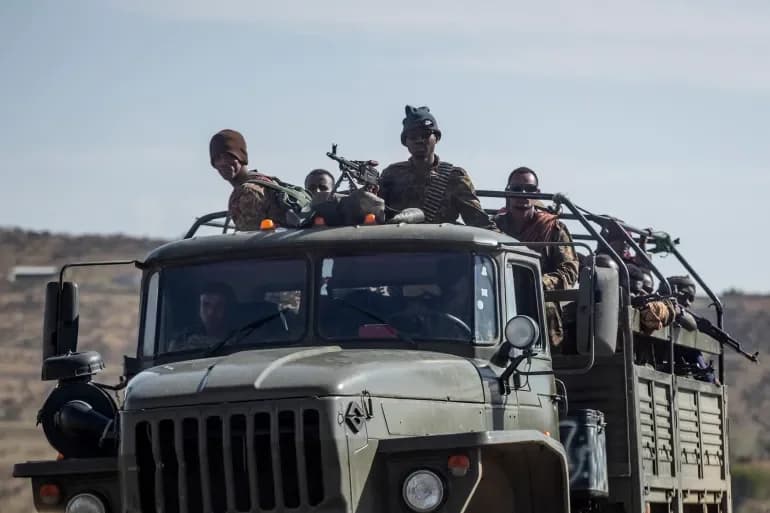
Ethiopia is teetering on the edge of a renewed civil war as hostilities between the federal government and the Tigray People's Liberation Front (TPLF) escalate across the country's northern regions. Despite the 2022 Pretoria Agreement intended to end one of the world's deadliest conflicts, recent weeks have seen a sharp increase in violence, including a drone strike on a television station in Mekelle and significant military engagements in the Afar and Amhara regions. While the Ethiopian federal military has publicly promised to exercise restraint, the growing scale of the fighting suggests that the fragile peace achieved two years ago is rapidly disintegrating.
The situation worsened significantly following a drone strike on the Tigrai TV station in Mekelle, which signaled a return to the high-intensity tactics used during the previous phase of the war. In response, TPLF forces, claiming to act in self-defense, have pushed beyond the borders of Tigray into neighboring Amhara and Afar. These advances have resulted in reported artillery strikes on towns like Erebti and the widespread displacement of civilians. On the federal side, Army Chief of Staff Berhanu Jula reported that a recent counter-offensive resulted in the deaths of 272 TPLF fighters, underscoring the lethal nature of the current clashes.
Adding to the complexity of the conflict is the emergence of new political and regional dynamics. A new coalition, the Ethiopian Peoples’ Forces Alliance for Survival, has formed to challenge Prime Minister Abiy Ahmed’s administration, while Berhanu Jula has accused neighboring Eritrea of actively supporting armed groups to destabilize Ethiopia. To control the narrative and manage the crisis, the federal government has once again restricted internet access and communications in northern Ethiopia, a move reminiscent of the total blockade that characterized the 2020-2022 conflict, which claimed an estimated 600,000 lives.
International observers and political experts warn that the federal government's failure to fully implement the political arrangements of the Pretoria Agreement, alongside continued restrictions on the Tigray region, has fueled this latest resurgence. As both sides prepare for more extensive military engagements, the humanitarian consequences for the region are becoming increasingly dire. The coming weeks will be critical in determining whether Ethiopia can return to the negotiating table or if it will descend back into the type of full-scale warfare that previously devastated the Horn of Africa.

