••
Turkey's Military Role in Somalia Under Scrutiny Following Intense Clashes in Baidoa
•2 min read•2 sources
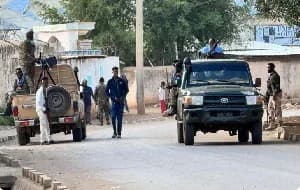
Intense military clashes have erupted in the Somali city of Baidoa as government forces, supported by Turkish air power, struggle to maintain control against local fighters. The conflict centers on a power struggle between the federal government and insurgents loyal to an ousted regional governor. This escalation marks a significant turning point in Turkey’s involvement in the Horn of Africa, as the deployment of fighter jets and drones has drawn the major power directly into Somalia’s internal political fractures.
The violence in Baidoa intensified following the entry of thousands of local fighters into the city, leading to heavy street-level combat and a struggle for territorial control. While the Somali National Army has attempted to assert authority, they have faced stiff resistance from forces allied with the former regional president. Reports indicate that Turkish F-16s and drones were deployed to support the national troops during these operations. This military intervention followed a controversial airstrike that allegedly resulted in the death of a prominent opposition leader, an event that has sparked widespread protests and accusations of foreign meddling in domestic affairs.
Turkey has long been a key strategic partner for Somalia, providing substantial military training and development aid, including ambitious plans for a major spaceport project. However, its deepening involvement is now being met with mixed reactions. While many Somalis appreciate Turkish support in the fight against Al-Shabaab insurgents, there is growing concern that Ankara’s resources are being used to tip the scales in favor of the federal government during internal political crises. This perceived lack of neutrality threatens to undermine Turkey's standing and complicates its long-term development goals in the region.
As the situation in Baidoa remains volatile, the international community is closely monitoring the risk of broader regional instability. For Turkey, the challenge lies in balancing its strategic and military commitments with the need to avoid being perceived as a partisan actor in Somalia’s complex clan-based politics. The outcome of the current standoff in Baidoa will likely influence both the future of Somali federalism and the sustainability of Turkey’s ambitious footprint in East Africa.
