••
DR Congo Faces Critical Health Worker Shortage as Ebola Outbreak Intensifies in North Kivu
•2 min read•3 sources
The Democratic Republic of Congo (DRC) is currently grappling with the fastest-growing and most severe Ebola epidemic in its history, according to the World Health Organization (WHO). The outbreak has now spread across seven provinces, resulting in 7,773 confirmed cases and 3,759 deaths. While some regions such as Ituri and Haut-Uele have seen a decline in new infections, the situation in North Kivu has worsened dramatically, with a 73% surge in cases. The WHO describes the current trajectory of the virus as unpredictable and largely uncontrolled, threatening to eclipse the scale of the 2014-2016 West Africa outbreak.
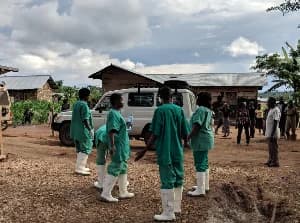
The human cost of the crisis was further highlighted by the recent death of Victor Kingombe, a young doctor working in Kisangani. His passing underscores the extreme risks faced by frontline medical personnel. Colleagues and family members were forced to observe his funeral from a distance as healthcare workers in full protective gear handled the burial. The loss of medical staff is particularly devastating given that the DRC is already facing a critical shortage of healthcare professionals. Each specialized treatment center requires approximately 300 trained professionals to operate effectively, a target that is becoming increasingly difficult to meet as the epidemic intensifies.
Compounding the staffing crisis are ongoing strikes by healthcare workers over unpaid wages and poor working conditions. Many frontline responders have stopped working to protest the lack of compensation, leaving treatment facilities dangerously understaffed. Furthermore, armed insecurity and widespread population displacement in the eastern regions of the country have severely hindered medical response efforts. These operational challenges make it nearly impossible to maintain consistent clinical surveillance and provide the intensive care necessary to lower mortality rates among the infected.
The crisis is taking a particularly heavy toll on children under the age of five, who face a case fatality rate exceeding 60%. Detecting the virus in young children remains a significant clinical challenge, often leading to delayed treatment. The WHO and local health authorities are calling for urgent, coordinated international support and enhanced financial transparency to manage the crisis. Without an immediate influx of healthcare personnel and resources to stabilize the workforce and secure treatment zones, the outbreak risks spiraling further out of control across the region.

