••
DR Congo’s Deadliest Ebola Outbreak Expands to South-Ubangi Province
•2 min read•2 sources
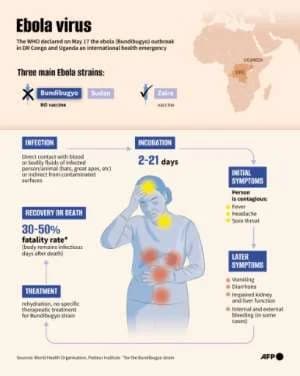
The Democratic Republic of Congo (DRC) is grappling with its most severe Ebola crisis to date as health authorities confirm the virus has spread to a seventh province. The detection of a case in South-Ubangi marks a significant escalation in the ongoing outbreak, which has already claimed thousands of lives since mid-May. Local officials and international health monitors are now on high alert as the virus reaches deeper into the country’s territory, threatening to destabilize an already fragile health system.
Acting Governor Jean-Rene Galekwa Vundawe officially announced the arrival of the virus in South-Ubangi on Friday following positive laboratory tests on a suspected case. The emergence of Ebola in this specific province is particularly concerning due to its strategic location bordering the Central African Republic and Congo-Brazzaville. Health experts fear that the virus could cross international borders if containment measures are not rapidly scaled up, given the high volume of movement across these frontiers.
Current data underscores the unprecedented lethality of this current wave. Since its detection earlier this year, the outbreak has resulted in 3,310 deaths out of 6,843 confirmed cases, reflecting a staggering mortality rate. The spread to South-Ubangi was traced back to an infected patient who traveled across several regions before succumbing to the disease. This mobility highlights the immense difficulty health workers face in tracking contacts and isolating cases in a country where internal travel is frequent but monitoring infrastructure remains limited.
Managing the crisis is further complicated by the DRC's historical challenges, including localized conflicts and a severely under-resourced medical infrastructure. While health authorities are intensifying efforts to monitor and isolate new cases, they have expressed an urgent need for additional personnel and medical supplies. Without a surge in international support and local resources, the risk of the virus spreading to even more provinces—or becoming a cross-border regional disaster—remains a looming threat for Central Africa.

