••
Airline groups urge US CDC to rethink Ebola travel mandates for DRC
•2 min read•1 source
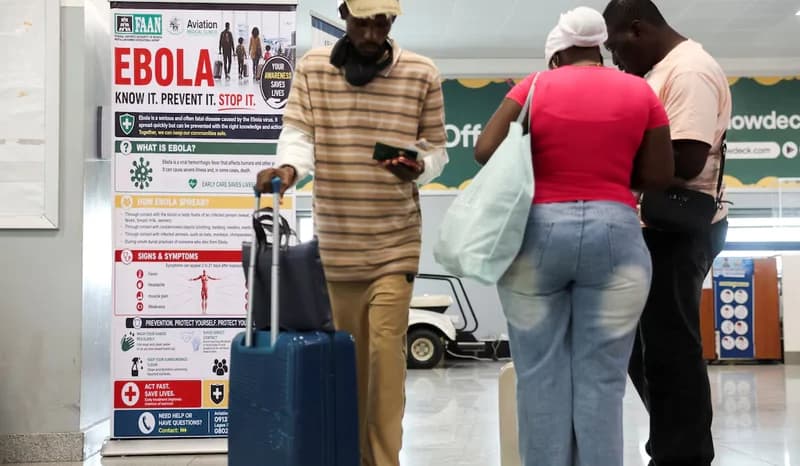
Major international and American airline associations have formally requested the U.S. Centers for Disease Control and Prevention (CDC) to reconsider new travel mandates aimed at preventing the spread of Ebola. The International Air Transport Association (IATA) and Airlines for America have expressed significant concerns regarding a requirement for U.S.-bound passengers to attest that they have not visited the Democratic Republic of Congo (DRC) within the previous 21 days. The policy, scheduled to take effect on November 3, is designed to limit potential exposure to the virus following recent outbreaks in the region.
The airline groups argue that the implementation of these attestation requirements on such short notice is impractical and creates significant operational hurdles. IATA highlighted the logistical challenges of managing these declarations for a large volume of travelers in a limited timeframe. According to IATA data, fewer than 25,000 air passengers traveling to the United States had connections to the DRC throughout 2025, suggesting that the administrative burden of the new rules may be disproportionate to the actual volume of travelers originating from the affected area.
In addition to general concerns about implementation, Airlines for America has called for specific exemptions to be granted to airline crew members and U.S. military personnel, describing the current requirements as overly stringent. The CDC's new restrictions are not limited to the DRC; they also encompass travelers arriving from Uganda and South Sudan. These measures come in response to a significant Ebola outbreak in Africa which, according to the Africa CDC, has already affected thousands of people across the continent.
As the November 3 deadline approaches, the aviation industry remains in dialogue with U.S. health authorities to find a more manageable solution. While the CDC maintains that these protocols are necessary for public health security, the airlines maintain that the current framework creates unnecessary operational friction. The outcome of these discussions will determine how international health screenings are conducted at U.S. ports of entry as the global health community continues to monitor the evolving Ebola situation in Central and East Africa.

