••
Zanetor Agyeman-Rawlings urges research commercialization for job creation
•2 min read•1 source
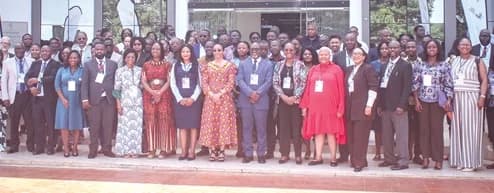
The Minister of Environment, Science and Technology, Dr. Zanetor Agyeman-Rawlings, has advocated for robust partnerships between academic institutions, government, and the private sector to drive national development. Speaking at the O.R. Tambo Africa Research Chairs Initiative (ORTARChI) Annual Gathering, the Minister emphasized the urgent need to translate scientific research into commercial ventures. She noted that turning academic findings into practical solutions is essential for addressing Africa’s pressing development challenges and generating sustainable employment for its youth.
During her address, Dr. Agyeman-Rawlings identified several structural barriers that currently prevent scientific discoveries from making a tangible impact on society. She highlighted that while African universities produce significant research, the journey from the laboratory to the marketplace is often stalled by inadequate funding and limited commercialization opportunities. The Minister argued that bridging this gap is a socioeconomic necessity to ensure that scientific investments yield practical dividends for the public rather than remaining as theoretical exercises.
The call for closer cooperation was reinforced by Natasha Ali, the Chief Executive Officer of the Oliver and Adelaide Tambo Foundation. Ali stressed the importance of ensuring that scientific discoveries are designed to serve immediate societal needs rather than remaining confined to academic circles. The gathering served as a platform for stakeholders to advocate for increased domestic investment in science and technology, stressing that industrial impact is dependent on the synergy between researchers and industrial players.
As Ghana seeks to modernize its economy under the current administration, the Ministry of Environment, Science and Technology is pushing for a shift toward industry-driven research. By fostering an environment where innovation is supported by both public policy and private capital, the government aims to transform the research landscape into a primary driver for economic growth. The initiative highlights a growing consensus that the future of African development lies in the ability to turn intellectual capital into viable industries.
