••
East African Security Crisis Deepens as Tigray Conflict Reignites and Sudanese Refugees Flood Into Chad
•3 min read•4 sources
The humanitarian and security landscape in East Africa has taken a sharp downturn as renewed fighting erupts in Ethiopia and the refugee crisis stemming from Sudan reaches critical levels. In northern Ethiopia, rebels from the Tigray People’s Liberation Front (TPLF) have declared a "full-blown war" against the federal government, extending their offensive into the neighboring Afar and Amhara regions. This escalation has been marked by heavy combat near the town of Abala, where federal forces have reportedly deployed drones to check the advance of TPLF rebels and their alliance of six other armed groups. The resurgence of hostilities has triggered widespread panic, with local populations stockpiling food as prices for basic commodities spike in anticipation of a prolonged conflict.
Coinciding with the military escalation, a significant communications blackout has returned to the Tigray region. State-owned Ethio Telecom has completely suspended services, while network monitoring groups like NetBlocks have confirmed a sub-national internet shutdown. Although the private provider Safaricom reportedly remained operational for a time, the disruption has severely hampered the flow of information and raised fears of a return to the total blockade experienced during the 2020-2022 civil war. This renewed violence comes at a sensitive diplomatic juncture, occurring just as the United States lifted certain sanctions on Ethiopia and Eritrea, only to express immediate disappointment over the TPLF’s fresh offensive.
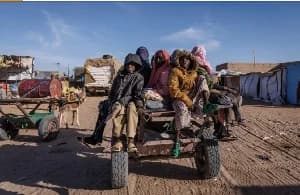
Simultaneously, the United Nations High Commissioner for Refugees (UNHCR) has sounded an urgent alarm regarding the deteriorating situation on Sudan's border with Chad. More than 55,000 Sudanese refugees have fled to Chad this year alone, with a sharp acceleration in arrivals recorded over the past week. The influx has completely overwhelmed local support capabilities in eastern Chad, which was already struggling with a pre-existing humanitarian crisis. The UN has warned that without an immediate and substantial increase in international funding, the conditions for these displaced populations will deteriorate into a full-scale catastrophe.
These twin crises highlight a burgeoning regional instability that threatens to displace millions more and disrupt trade and aid corridors across the Horn of Africa and the Sahel. While the Ethiopian federal government maintains a military advantage, the TPLF's strategy of targeting key infrastructure and forming multi-group alliances suggests a protracted struggle. Meanwhile, the international community remains under pressure to provide the necessary resources to Chad to prevent a total collapse of the humanitarian response. The coming weeks will be critical in determining whether diplomatic intervention can stall the Ethiopian offensive or if the region is headed toward a wider, more integrated conflict.


