••
Ghana Secures Historic Seat on International Law Tribunal and Reaffirms Côte d’Ivoire Land Boundaries
•2 min read•2 sources
Ghana has achieved two significant milestones in international law and regional diplomacy with the swearing-in of Dr. Sylvia Ama Adusu to the International Tribunal for the Law of the Sea (ITLOS) and the successful inauguration of new boundary pillars along the border with Côte d’Ivoire. These developments highlight Ghana’s leadership in maritime governance and its proactive approach to maintaining peaceful territorial relations. While Dr. Adusu’s appointment marks a historic first for African women on the global stage, the land boundary reaffirmation exercise provides physical security and legal clarity for the nation's western frontier.
Dr. Sylvia Ama Adusu has made history as the first African woman to serve as a member of ITLOS, a prestigious judicial body established by the United Nations Convention on the Law of the Sea. Her swearing-in follows an impressive election in June 2023, where she secured 130 out of 169 votes during the 36th Meeting of States Parties. With more than 30 years of experience in international law and a track record of handling complex maritime cases for Ghana, Dr. Adusu is joined by new judges from Brazil, Tunisia, Vietnam, and India. Her nine-year term is scheduled to officially begin on October 1, 2026, ensuring continued African expertise in international maritime dispute resolution.
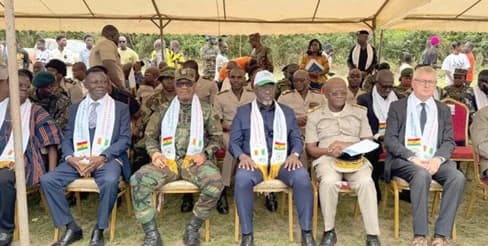
On the regional front, Ghana and Côte d’Ivoire have jointly commissioned 37 international boundary pillars, marking the completion of Phase One of their Land Boundary Reaffirmation Exercise. The initiative, which covers a 150 km stretch of the border, involved ceremonies in New Town, Ghana, and Diby, Côte d’Ivoire. Funded by GIZ and the African Union Border Programme, the project sought to reaffirm colonial-era borders as agreed upon in 1964. Major General Anthony Ntem of the Ghana Boundary Commission noted that these pillars are essential for regional integration, as they provide the legal certainty necessary to pursue the African Union’s broader goal of a borderless and unified continent.
Together, these achievements reinforce Ghana’s commitment to international law and bilateral cooperation. By placing a veteran legal expert on a global tribunal and physically securing its land borders, the country is setting a standard for peaceful sovereignty management in West Africa. These steps are expected to reduce potential territorial friction and provide a stable framework for future economic and social integration between Ghana and its neighbors, ultimately strengthening the security architecture of the sub-region.
