••
Spain train collision in Toledo province kills 30 people
•2 min read•1 source
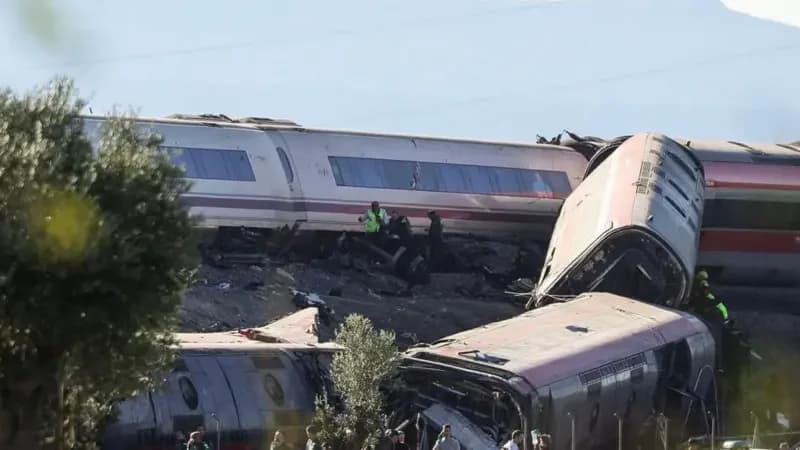
At least 30 people have died and hundreds more were injured on Wednesday morning after two high-speed trains collided in Spain's Toledo province. The accident involved a state-operated Renfe train striking the rear of a stationary train managed by the private operator Iryo. With more than 500 passengers across both services at the time of the crash, emergency services were heavily deployed to the site to manage the rescue operations and provide medical assistance.
Spanish Prime Minister Pedro Sánchez has expressed his condolences to the victims and their families, while authorities have launched a formal investigation into the cause of the disaster. Initial reports indicate that the Iryo train was stationary on the tracks when the Renfe service approached from behind. The impact resulted in severe damage to several carriages, making the task of extricating trapped survivors particularly challenging for first responders. Hospitals in the surrounding region remain on high alert as they treat the hundreds of injured passengers.
This incident marks the second fatal rail accident in Spain within the early months of 2026, following another major crash in January. The frequency of these events has triggered intense scrutiny of the nation's rail safety protocols and infrastructure. Transport officials are facing mounting pressure to explain how the high-speed signaling systems failed to prevent the two trains from occupying the same section of track, with experts calling for an immediate review of automated safety mechanisms.

