••
Save Nations Foundation and Shalom D Susu Enterprise Lead Private Sector Support for Education in Accra and Krobo Regions
•3 min read•8 sources
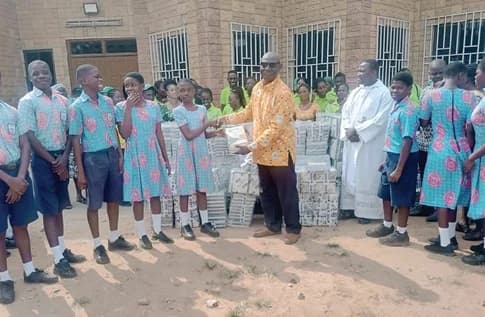
Several non-governmental organizations and private enterprises have intensified their support for Ghana’s education sector by donating essential learning materials and launching community impact programs across Accra and the Krobo region. These initiatives, which come as schools reopen for the new academic year, are designed to alleviate the financial burden on parents and ensure that students in underserved communities are equipped for academic success. Leading these efforts are the Save Nations Foundation, Shalom D Susu Enterprise, and Compassion International Ghana, all of whom have reiterated the vital link between accessible education and the eradication of poverty. In Accra, the Save Nations Foundation (SNF) donated a significant quantity of exercise books to the Nooria Islamic Basic School. Isaac Kofi Dzokpo, the Co-Executive Founder and Country Director of SNF, emphasized that education is the most effective tool for breaking the cycle of poverty and pledged the foundation's continued support for the school following a staff appeal. Assistant Headteacher Madam Dorcas Dennis welcomed the timely intervention but also used the opportunity to call for broader assistance regarding school infrastructure and logistics to improve overall learning outcomes. Concurrently, the Shalom D Susu Enterprise, managed by Rev. Peter Ankrah Doodoo, provided over 11,200 exercise books to the Kwashieman Anglican Junior High School in Accra. Rev. Doodoo noted that the donation was specifically intended to ease the financial strain on families during the back-to-school season and motivate students to take their studies seriously. The school's head teachers expressed profound gratitude, noting that the contribution significantly enhances student preparedness and boosts the morale of both the teaching staff and the pupils. Further East, in the Krobo communities, Compassion International Ghana (CIGH) has been commended for its extensive work through the Somanya cluster of partner churches. During an annual review meeting themed 'Reflecting on our journey, strengthening our impact,' Edward Nyamekye, CIGH’s Senior Manager of Partnership, highlighted the success of 15 child development centers that serve thousands of beneficiaries. These centers utilize a holistic approach, combining educational support with health initiatives to help children escape economic hardship. Local health officials have also pledged to collaborate with the organization to enhance health and wellness outcomes in the area. These diverse efforts underscore a growing reliance on private and non-profit interventions to bridge resource gaps within the Ghanaian educational system. While the immediate distribution of thousands of exercise books provides a necessary boost for students at the start of the term, the recurring calls for improved infrastructure and logistical support from school administrators indicate that more sustainable, long-term investments are required. Stakeholders continue to advocate for collaborative partnerships between the government, corporate entities, and philanthropists to ensure that every child, regardless of their background, has access to quality education.


