••
Minister Sam George Announces Subscriber Compensation and Infrastructure Reforms Amid Rising Fibre Cuts
•2 min read•8 sources
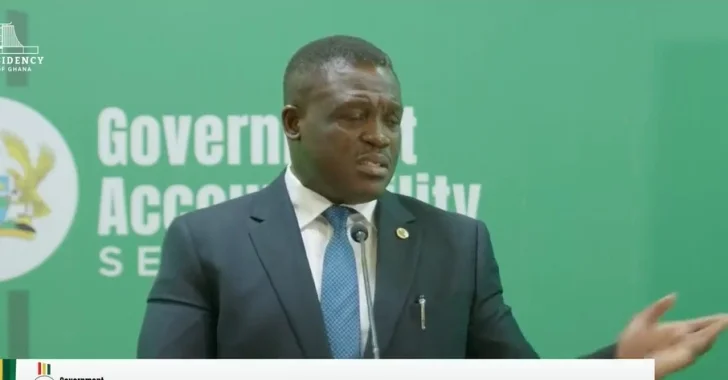
At the Government Accountability Series on September 7, 2026, the Minister for Communication, Digital Technology, and Innovations, Samuel Nartey George, announced that the National Communications Authority (NCA) will introduce a mandatory compensation scheme for telecommunications subscribers by the end of the year. This initiative is designed to protect consumers from service disruptions caused by network faults beyond their control. The Minister revealed that the industry is facing a crisis of infrastructure damage, with over 8,000 fibre-optic cable cuts reported so far in 2026, resulting in repair costs for operators exceeding US$20 million.
Minister George identified the government’s own "Big Push" road construction programme as the leading cause of these disruptions, accounting for 49% of all fibre cuts. He warned that if current trends continue, the number of incidents could reach 9,000 by year-end. Beyond roadworks, illegal mining—commonly known as galamsey—is responsible for 25% of fibre-optic damage. Unlike road contractors who often report accidents, illegal miners frequently leave damage unreported, complicating restoration efforts and significantly threatening the stability of digital services in affected regions.
To mitigate these challenges, the Ministry is proposing a "Dig Once" policy, which would mandate that road contractors install dedicated fibre chambers during the initial phases of construction. This infrastructure strategy aims to reduce the financial burden on telecom operators and improve service reliability. Despite these setbacks, the government remains committed to expanding connectivity, with plans to increase the number of new telecommunications sites from just 50 in 2025 to 800 by the end of 2026. Additionally, the Minister confirmed that 5G spectrum assignments are on track to be finalized before the year concludes.
Transitioning to the broadcasting sector, the Minister announced a new cost-sharing framework and graduated tariff-support mechanism for the National Digital Terrestrial Television (DTT) platform. Scheduled to take effect in January 2027, the framework follows a comprehensive review of the DTT platform completed in July. The new model is intended to alleviate the financial strain on qualifying broadcasters, supplementing the existing subsidized monthly tariff of $7,000 per channel. These reforms underscore the government’s broader strategy to ensure universal access to information while maintaining a sustainable digital ecosystem.

