••
Minister Sam George and Partners Launch Major Digital and Technical Skills Initiatives Across Ghana
•3 min read•4 sources
Ghana is undergoing a significant transformation in its educational landscape, with the government and international partners launching a series of initiatives aimed at equipping the youth with digital and technical skills. At the forefront of this movement is the Ministry of Communication, Digital Technology and Innovations, which is spearheading programs to bridge the digital divide and prepare students for a rapidly evolving global economy. These efforts range from high-level university partnerships to grassroots community infrastructure projects, all designed to foster a future-ready workforce.
Minister Samuel Nartey George recently announced a landmark partnership between the government and 11 Ghanaian universities, including the University of Ghana and the Kwame Nkrumah University of Science and Technology (KNUST). This collaboration aims to embed certifications from the "One Million Coders Programme" directly into existing degree and diploma courses, ensuring students gain practical competencies in fields like cybersecurity and data analytics alongside their academic qualifications. KNUST has already reported that over 1,000 students have enrolled in the program. Additionally, the Minister opened the 2025 Girls-In-ICT Open Day, a five-day initiative designed to empower young girls with leadership and AI skills, encouraging them to transition from tech users to innovators and leaders.
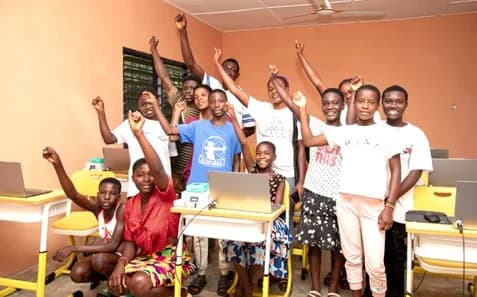
While urban centers benefit from university-level integrations, rural digital literacy is being addressed through community-focused projects. The Hunger Project - Ghana recently inaugurated a new ICT Centre in Domi Achiansa, located in the Ayensuano District. Equipped with 11 laptops and internet access, the facility is set to provide training to 300 young people from nine surrounding communities. Agatha Quayson, Country Leader for The Hunger Project - Ghana, emphasized that such infrastructure is vital for improving employability and access to information. Local leaders, including Barima Korli Wayo I, have urged the youth to maximize these resources to secure their professional futures.
Beyond information technology, the technical and vocational education and training (TVET) sector is receiving a boost through the Hyundai KOICA NextGen Project. This five-year initiative, launched in collaboration with the Korea International Cooperation Agency (KOICA) and Plan International, focuses on the automotive industry. The project aims to train over 400 direct beneficiaries and support approximately 20,000 TVET students in emerging technologies such as electric vehicles. By validating curricula with the Ministry of Education, the program ensures that Ghanaian graduates are ready for the technical demands of a modern, competitive automotive market.
These diverse initiatives represent a coordinated effort to future-proof Ghana’s workforce under the current administration. By combining academic certification, rural infrastructure, and industry-specific technical training, the country is positioning its youth to lead in both the digital and industrial sectors. As Minister Sam George highlighted, the goal is not just to produce graduates, but to foster a generation of digitally literate leaders capable of driving Ghana's economic growth and technological independence.

