••
Ecobank Ghana, Kaerbo For Africa, and ASA Savings Lead New Private Sector Support for Education
•2 min read•3 sources
Private sector organizations and non-governmental bodies are significantly ramping up their support for Ghana’s education sector through infrastructure development, technological integration, and financial assistance. These recent interventions, led by Ecobank Ghana, Kaerbo For Africa, and ASA Savings and Loans, aim to bridge the resource gap in public schools and alleviate the financial burden on underprivileged families. By focusing on both physical classrooms and digital literacy, these stakeholders are working to ensure that students from diverse backgrounds can access quality learning environments and modern skills.
At the La-Nkwantanang Cluster of Schools in Madina, Ecobank Ghana PLC has commissioned a refurbished Digital Learning Centre as part of its Ecobank Day 2026 celebrations. Under the theme "Building Tomorrow’s Skills Today," the bank provided 26 computers equipped for coding, web development, and other essential technologies. This centre is a component of the bank’s broader three-year "Transforming Africa Through Education" programme and is expected to benefit over 2,000 pupils from eight different schools. To date, Ecobank has established seven such centres in Ghana, contributing to a continental network of 66 IT labs that support over 46,000 children, with a pledge for ongoing maintenance to ensure sustainability.
In the Central Region, the Danish NGO Kaerbo For Africa has further strengthened its commitment to the Gomoa Nyanyano Secondary Technical School by handing over a new three-classroom block. The school, which was originally constructed by the NGO and integrated into the public system in 2020, has demonstrated strong academic progress, notably in the 2026 West African Senior School Certificate Examination (WASSCE). Founder Anne Grethe Scharbach emphasized the organization’s mission to provide better learning opportunities in deprived communities. While the local chief, Nana Ayi-Quaye I, expressed gratitude for the new block, he also called for further investment to match the school’s rising performance.
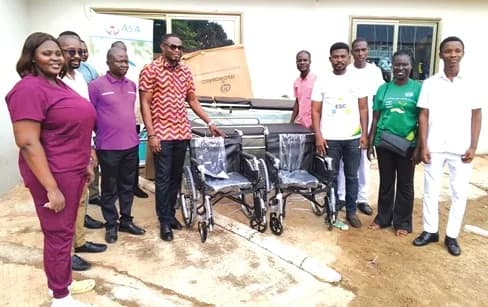
Complementing these infrastructure projects, ASA Savings and Loans has provided GH¢50,000 in educational assistance to 50 students across two districts, including Ga East. This initiative targets high-performing students from underprivileged backgrounds, assisting them in pursuing tertiary education or preparing for senior high school. Branch Manager Patricia Effia Boafoa Ofori noted that the program’s goal is to ease the financial pressures on families while encouraging more active parental involvement in student education. Together, these varied contributions highlight a growing partnership between corporate entities and educational authorities to foster a more inclusive and technologically-ready generation of Ghanaian students.


