••
Minister Sam George Leads Ghana’s AI Diplomacy at UNESCO Forum as Africa Moves to Scale Enterprise Intelligence
•2 min read•2 sources
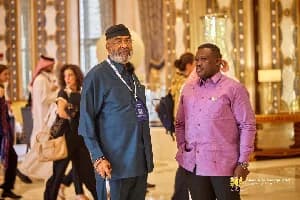
Ghana is asserting its presence on the global stage of technology governance as Minister of Communication Samuel Nartey George recently represented President John Mahama at the UNESCO Global Forum on AI Ethics in Riyadh, Saudi Arabia. Held from September 14 to 17, 2026, the forum highlights Ghana’s commitment to shaping the ethical landscape of Artificial Intelligence (AI). This high-level diplomatic engagement comes at a time when the broader African continent is transitioning from the mere adoption of AI to the complex task of scaling it for real-world impact across various sectors.
During the summit, Ghana’s Ambassador to Saudi Arabia, Alhaji Said Sinare, hosted Minister George, marking a significant step in the nation’s "AI diplomacy." The participation of Ghanaian leadership in Riyadh underscores a strategic push to ensure that global AI standards align with regional interests. This diplomatic effort complements the internal drive within the African tech ecosystem to move AI from conceptualization to practical, business-integrated applications that solve specific continental challenges.
Experts across the continent emphasize that scaling enterprise AI requires far more than just software acquisition; it necessitates a robust and interconnected ecosystem. Success in this field is dependent on high-quality infrastructure, rigorous cybersecurity measures, and comprehensive data governance policies. Industry leaders suggest that businesses should avoid reacting impulsively to new technologies and instead focus on identifying specific problems that can be addressed incrementally. This approach ensures that AI implementation is grounded in the existing operational realities of African businesses rather than being an external imposition.
To bridge the gap between technology availability and its practical benefits, there is a critical need to address the skills gap within the African tech industry. Collaboration among technology providers, policymakers, and private enterprises is essential to fostering a more inclusive tech education landscape. By building local capabilities and localizing core AI solutions to meet regional needs, African nations can create scalable products that are tailored to their unique economic environments.
Ultimately, the path to a tech-enabled future for Africa lies in the synergy between international policy participation and local implementation. As Ghana continues its diplomatic efforts in forums like UNESCO, the focus remains on ensuring that AI serves as a tool for sustainable growth. The collective call to action for stakeholders is to enhance cooperation, prioritize regional scalability, and foster an environment where AI technology translates into tangible improvements for communities across the continent.
Related topic
John Mahama: Latest News & Updates →

