••
NPP Demands Constituent Assembly Amidst Contention Over Proposed Five-Year Presidential Terms
•3 min read•8 sources
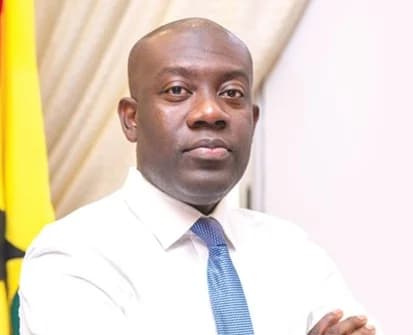
The New Patriotic Party (NPP) has formally demanded the establishment of a Constituent Assembly to deliberate on 206 proposed amendments to the 1992 Constitution before any national referendum is held. NPP Chairman Kojo Oppong Nkrumah emphasized that a broad national consensus is vital for reforms that should reflect a collective agreement rather than partisan preferences. The party has warned that without a legally established deliberative body—comprising representatives from political parties, organized labor, and civil society—it will oppose any referendum processes initiated by the President John Mahama-led government. This stance follows significant disagreements between the administration and the Constitution Review Committee (CRC) over the scope and nature of governance changes affecting the Executive, Parliament, and Judiciary.
Central to the friction are proposals to extend presidential and parliamentary terms from four to five years, a move accepted by the government but rejected by the NPP and various political analysts. Dr. Kwame Asah-Asante of the University of Ghana argued that transition challenges are better addressed through early preparation and efficiency rather than longer terms. Similarly, legal expert Martin Kpebu criticized the government for failing to show the NPP sufficient respect in the review process, arguing that the party should have been central to discussions given its significant support base. Another point of contention is the proposal to lower the presidential eligibility age from 40 to 30 or 35. Kwaku Ansa-Asare, former Director of the Ghana School of Law, questioned the urgency of this change, suggesting that youth participation should not be prioritized over stable constitutional frameworks.
Beyond political parties, the Citizens’ Platform on Constitutional Reform (CPCR) has urged the government to pass a "Constitutional Reform Implementation and Roadmap Act" to provide a clear legal framework for the process. Chairperson Prof. Akosua Keseboa Darkwah stressed that citizens should be allowed to vote on individual amendments rather than a single "yes/no" package, ensuring informed participation. This call for procedural clarity is echoed by veteran journalist Kwesi Pratt Jnr., though he cautioned that amendments alone cannot resolve Ghana’s difficulties. Pratt argued that the underlying issue remains the conduct of state institutions and political leaders rather than the constitutional text itself, citing the historical context of the 1992 Constitution and the legacy of Kwame Nkrumah.
As the debate continues, the legal requirements for constitutional amendments present a significant hurdle. For changes to entrenched clauses under Article 290, at least 40% of registered voters must participate in a referendum, with 75% of those casting ballots in favor. The CPCR has highlighted that without adequate government-funded civic education and ample time for public deliberation, these thresholds may be difficult to reach. The push for a Constituent Assembly represents a growing demand for a more inclusive, non-partisan approach to ensure that any changes to the nation's supreme law enjoy the legitimacy required for long-term stability and democratic governance.
Related topic
NPP (New Patriotic Party): Latest News →

