Anansi News
HomeBriefsAsk GhanaTopicsTools
•
•

Stay Informed

Get AI-curated news briefs from Ghana delivered to your inbox every morning. Free forever, no spam.

Explore

  • Home
  • Briefs
  • About

Categories

  • Politics
  • Business
  • Sports
  • Entertainment
  • Africa

Features

  • Analysis
  • Cedi Rates
  • Dollar to Cedi
  • Ghana Gold Price
  • BoG Policy Rate

Topics

  • Armed Forces Recruitment
  • WAEC Results & News
  • Nana Ama McBrown
  • NDC News
  • All Topics

Legal

  • Privacy Policy
  • Terms of Service
Anansi News© 2026. All rights reserved.
Made withfor Ghana
education

National Identification Authority and GRA Advance Youth Registration and Leadership Development Initiatives

12th June•2 min read•2 sources
National Identification Authority and GRA Advance Youth Registration and Leadership Development Initiatives
  1. Home
  2. /Education
  3. /National Identification Authority and GRA Advance Youth Registration and Leadership Development Initiatives

The National Identification Authority (NIA) has partnered with the National Health Insurance Authority (NHIA) to launch a Ghana Card registration drive for children aged 6 to 14 in the Northern Region. This initiative, part of a broader nationwide rollout, coincides with the Ghana Revenue Authority’s (GRA) efforts to enhance institutional capacity through the certification of staff in advanced leadership development programmes. Together, these movements highlight a concerted effort toward strengthening both the national identification database and the professional standards of state institutions.

The NIA registration exercise, which began on June 11, follows similar successful operations in the Volta and Oti Regions. Operating daily from 8:00 a.m. to 5:00 p.m., the drive targets both school-enrolled and out-of-school children at community centers and educational facilities. Parents are required to provide original birth certificates, with additional supporting documents like National Health Insurance Scheme cards being highly encouraged. Officials have stressed the importance of data accuracy and issued a firm warning against attempts to register non-Ghanaian children during this critical mop-up phase.

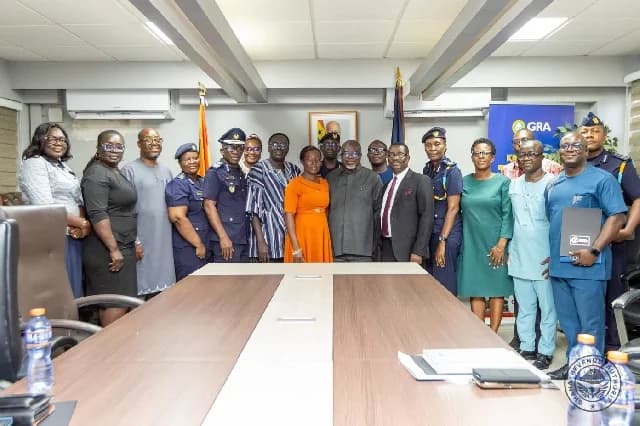
Parallel to the youth-focused identification drive, the GRA has successfully concluded its Emerging Leadership Development Programme (ELDP) and the Leadership Development Programme (LDP). These courses, which were initiated in November 2025, were designed to prepare rising leaders and senior officers for greater responsibilities within the authority. The Deputy Commissioner for Training and Development highlighted that the programs focus on core leadership competencies and succession planning, ensuring the GRA maintains a robust pipeline of skilled administrators to manage the nation's revenue systems.

These dual initiatives in identification and professional education represent significant steps toward a more structured and capable public sector. While the NIA’s registration drive ensures that younger citizens are integrated into the national system for better access to services, the GRA’s commitment to staff development ensures that current public servants are equipped with the skills necessary for efficient governance. As both programs move forward, they are expected to yield long-term benefits for the country's social and economic infrastructure.

Our Take

From the Team

Coming Soon

Our team will add key insights, trends, and actionable takeaways to help you stay informed faster.

This story touches markets covered on Anansi Intelligence ↗.

Related topic

Ghana Customs Recruitment: Latest News & Updates →

More from education

Continue exploring similar stories

Prophet Patrick Amoako Warns Against Rushing into Marriage as a Solution for Personal Indiscretion
education|Yesterday

Prophet Patrick Amoako Warns Against Rushing into Marriage as a Solution for Personal Indiscretion

Prophet Patrick Amoako has issued a cautionary message regarding the motivations for entering marriage, specifically warning that the institution should not be viewed as a remedy for personal character flaws. Addressing common misconceptions, the Prophet emphasized that "marriage is not an antidote for womanizing," suggesting that the sanctity of marriage cannot automatically fix deep-seated behavioral issues. He urged individuals to seek personal transformation and stability before involving a partner in a lifelong commitment, rather than expecting the union to act as a corrective measure for their struggles. Central to the Prophet's advice is the rejection of societal pressure as a valid reason for marriage. He noted that many individuals feel compelled to wed due to external expectations or a desire to escape personal problems, which often leads to unstable foundations. Instead, Prophet Amoako advocates for a period of genuine readiness, where the decision to marry is born out of emotional and spiritual maturity rather than a reactive response to social timelines or internal crises. By emphasizing readiness over obligation, he highlights the importance of entering marriage with a clear mind and a prepared heart. Ultimately, the Prophet’s counsel serves as a call for greater self-awareness and honesty within relationships. He maintains that marriage is a serious commitment that requires individuals to be at their best before they can contribute to a healthy and lasting union. By addressing personal issues independently of their marital status, individuals can ensure that they are building their future homes on the basis of true compatibility and commitment, rather than using a spouse as a shield for unresolved personal challenges.

GES Urges NGO Collaboration in Volta Region as GRA Boss Supports Upper Denkyira East Development
education|Yesterday

GES Urges NGO Collaboration in Volta Region as GRA Boss Supports Upper Denkyira East Development

In a concerted effort to enhance regional development and educational infrastructure, the Ghana Education Service (GES) and key institutional leaders have called for deepened partnerships with non-governmental organizations (NGOs) and private funds. These initiatives, spanning from the Volta Region to the Upper Denkyira East Municipality, highlight a growing emphasis on collaborative resource mobilization to address critical gaps in education, healthcare, and community security. By aligning private contributions with public needs, officials aim to create a more robust framework for social welfare across the country. In the Volta Region, Marian Jemima Akua Adzroe, the acting Regional Director of Education, has formally urged NGOs to align their interventions with GES priorities. Speaking at a recent stakeholders' meeting, Adzroe emphasized that while NGOs have made significant contributions to resource mobilization in underserved areas, better coordination is essential to prevent the duplication of efforts. She advocated for a transparent partnership framework that prioritizes foundational education and ongoing reforms in the secondary sector, ensuring that educational gains are sustained and that no child is left behind due to a lack of access or resources. Complementing this drive for regional improvement, the Commissioner-General of the Ghana Revenue Authority (GRA), Anthony Kwasi Sarpong, has partnered with the Emelia Ankomah Education, Health and Welfare Fund to spearhead development projects in the Upper Denkyira East Constituency. The collaboration has recently resulted in the construction of a new mothers' hostel at the Dunkwa-on-Offin Municipal Hospital to support caregivers and the donation of a pickup vehicle to the local police command. Mr. Sarpong expressed his personal commitment to improving lives in his home community through these targeted interventions, which were welcomed by local leaders as vital for community welfare. These developments underscore a broader national strategy where public institutions and high-ranking officials leverage private and non-profit partnerships to bolster the state's capacity. By fostering transparent frameworks for NGO engagement and encouraging targeted local philanthropy, stakeholders aim to create a more resilient support system for Ghana's social services. The success of these initiatives in the Volta and Central regions provides a blueprint for how coordinated community support can address the multifaceted needs of education, health, and public safety simultaneously.

A section of the participants in the licensed surveyors course
education|Yesterday

Lands Commission Calls for Increase in Licensed Surveyors to Boost Ghana's Land Administration

Naa Seidu Zakari Abu, the acting Director of the Survey and Mapping Division at the Lands Commission, has issued an urgent call for an increase in the number of licensed surveyors across Ghana. Speaking at the commencement of a mandatory two-week refresher course for aspiring professionals, Abu highlighted a significant deficit in the current workforce, which stands at approximately 400 licensed surveyors. He emphasized that this figure is woefully inadequate to meet the nation's growing land management needs and that a robust pool of experts is essential for efficient land administration and national development. To achieve effective operations across the country, the Lands Commission envisions a decentralized presence of surveying expertise. Abu proposed that, ideally, every Metropolitan, Municipal, and District Assembly (MMDA) should be staffed with at least four licensed surveyors. This strategic distribution is intended to streamline land processes at the local level, ensuring that surveying services are both accessible and professional. The current shortage often leads to delays in land documentation and contributes to broader administrative bottlenecks that the Commission is keen to resolve through targeted recruitment and rigorous certification processes. The ongoing refresher course serves as a critical gateway for potential surveyors to demonstrate their technical competencies and adherence to ethical standards. Conducted in accordance with relevant legislation, the training aims to ensure that new practitioners are well-versed in modern surveying techniques and the legal frameworks governing land in Ghana. Emmanuel Adansi Bonah, the Deputy Executive Secretary, supported the initiative, stressing that such programs are vital for maintaining professional standards and ensuring that land management is conducted with the highest degree of integrity. Ultimately, the push for more licensed surveyors is designed to address systemic development challenges, including land-related disputes and insecure property rights. By bolstering the ranks of qualified professionals, the Lands Commission aims to provide the technical data necessary for informed governance and infrastructure planning. As the refresher course progresses, the Commission remains committed to building a professional cadre that can support Ghana's long-term socioeconomic objectives through accurate, transparent, and efficient land administration.

Education Experts Back BECE Stanine Grading as Teacher Unions Demand Urgent Salary Adjustments
education|Yesterday

Education Experts Back BECE Stanine Grading as Teacher Unions Demand Urgent Salary Adjustments

The Ghanaian education sector is currently navigating critical developments regarding both student assessment frameworks and teacher welfare. Dr. Peter Partey Anti, an education expert and Executive Director of the Institute for Education Studies (IFEST), has offered a professional endorsement of the Stanine Grading System used for the Basic Education Certificate Examination (BECE), describing it as a suitable mechanism for secondary school placement. Simultaneously, three major teacher unions—the Ghana National Association of Teachers (GNAT), the National Association of Graduate Teachers (NAGRAT), and PRETAG—have issued a joint demand for the Ministry of Education and the Ghana Education Service (GES) to ensure the automatic salary placement of newly promoted staff. In his evaluation of the BECE grading methodology, Dr. Anti emphasized that the Stanine system is effective because it prioritizes comparative ranking, which is essential for the placement of candidates into second-cycle institutions. However, he cautioned that the system requires periodic independent assessments to maintain fairness and accuracy. This call for reform comes amidst growing concerns from private schools regarding this year's results. Dr. Anti urged for greater transparency in grading and better alignment with current curriculum standards, suggesting that any claims of systemic disadvantages for private school candidates must be thoroughly investigated and backed by empirical evidence. While student grading remains a point of academic discussion, the industrial front is facing pressure as teacher unions demand immediate administrative action. GNAT, NAGRAT, and PRETAG have called on the GES to honor the automatic salary placement protocol that has been in place since 2020. The unions emphasized that newly promoted teachers should be transitioned to their correct grades and salary scales without delay, setting a deadline of August 31 for these adjustments to be finalized. They warned the government against making unilateral changes to existing promotion arrangements without exhaustive consultation with union leadership. These two developments underscore a broader push for efficiency and transparency within Ghana’s educational infrastructure. Whether through the refinement of statistical differentiation in student grading or the prompt fulfillment of labor obligations to educators, stakeholders are calling for systems that are both credible and predictable. As the Ministry of Education and the Ghana Education Service manage these priorities, the resolution of salary placement issues and the continued evaluation of the Stanine system will be pivotal in ensuring stability and quality across the nation’s schools.

All
africa
business
education
entertainment
health
news
politics
sports
technology