••
President Mahama Champions Reparatory Justice and "Accra Reset" at 81st UN General Assembly
•3 min read•39 sources
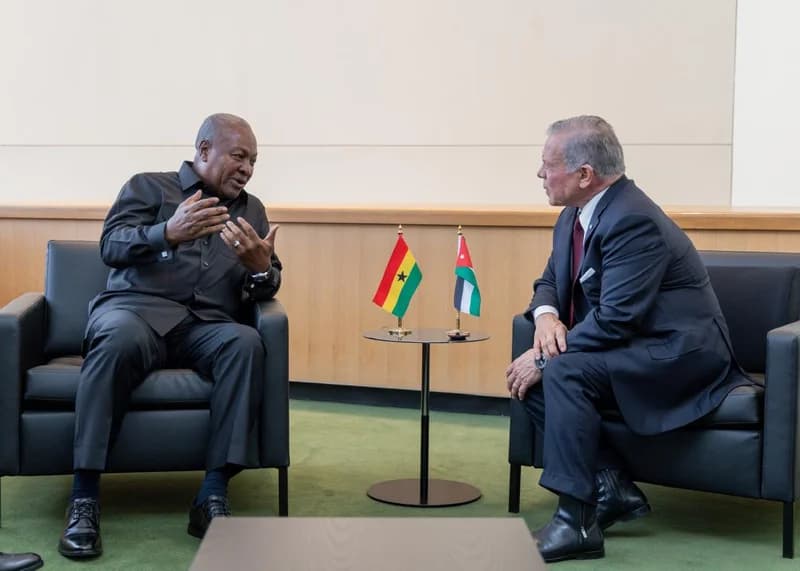
President John Dramani Mahama has taken center stage at the 81st United Nations General Assembly (UNGA) in New York, spearheading a dual agenda of global reparatory justice and the "Accra Reset" initiative. As the African Union (AU) Champion for Reparatory Justice, the President addressed high-level side events co-hosted by Ghana, France, and Germany, urging the international community to move from mere acknowledgment of historical wrongs to concrete action. This push follows a historic UN resolution recognizing the transatlantic slave trade as a crime against humanity, setting the stage for Ghana’s leadership in seeking restitution for cultural heritage and human remains.
During his addresses, President Mahama outlined three fundamental pillars to guide the global reparative justice agenda. First, he called for the establishment of a permanent, standardized international system for the restitution of African cultural property to replace sporadic gestures of goodwill. Second, he rejected arguments that returns should be delayed due to a perceived lack of preservation capacity in Africa, advocating instead for investments in local infrastructure. Finally, he emphasized that cultural heritage must be viewed as a vital driver for economic and social development, particularly through education and tourism. Brazilian President Luiz Inácio Lula da Silva commended Mahama’s leadership, noting that his efforts have kept the issue of reparatory justice at the forefront of the global conversation.
Parallel to the justice agenda, President Mahama championed the "Accra Reset" initiative, a framework designed to overhaul global health governance and development financing. The initiative, which received strong backing from former British Prime Minister Gordon Brown and UN Secretary-General Antonio Guterres, advocates for the Global South to exercise greater ownership over its health systems and financial resources. Mr. Brown praised the shift away from donor-driven aid models toward country-led governance. President Mahama highlighted that the 2020s are being defined by interconnected global crises, necessitating a restructure of development financing that prioritizes sovereignty, accountability, and self-reliance for African nations.
On the sidelines of the Assembly, Ghana’s diplomatic outreach extended to several high-level bilateral engagements. President Mahama signed a landmark Air Services Agreement with Trinidad and Tobago’s Prime Minister Kamla Persad-Bissessar to enhance connectivity and trade between Africa and the Caribbean. He also held strategic discussions with King Abdullah II of Jordan, Kenyan President William Ruto, and Swiss President Guy Parmelin, focusing on regional security, economic recovery, and technological cooperation. Foreign Affairs Minister Samuel Okudzeto Ablakwa noted that even nations like the United States have expressed a willingness to collaborate with Ghana on cultural heritage projects and reconciliation efforts, despite previous diplomatic differences.
These extensive diplomatic efforts signal a shift in Ghana’s foreign policy toward a more assertive role in global governance. By linking the restitution of the past with the economic reset of the present, President Mahama is positioning Ghana as a bridge between the Global South and the North. The "Accra Reset" and the reparatory justice pillars provide a blueprint for a united African-Caribbean front. As advisory panels and legal frameworks begin to take shape following these UNGA engagements, the focus now turns to implementing these international commitments to ensure they translate into tangible development and justice for the continent.
Related topic
John Mahama: Latest News & Updates →

