••
Mahama Administration Spearheads Major Infrastructure Projects and Economic Reforms to Drive National Growth
•3 min read•12 sources
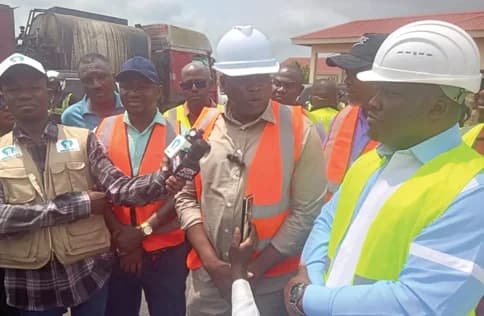
The administration of President John Mahama has unveiled a comprehensive suite of infrastructure, energy, and agricultural initiatives aimed at stabilizing the economy and addressing chronic urban challenges. Central to this development push is the commencement of major drainage construction at Kaneshie along the Dr Busia Highway, a key component of the Greater Accra Resilient and Integrated Development (GARID) Project. Minister for Works and Housing, Ahmed Ibrahim, announced that the first phase of road closures will begin on September 7, 2026, to replace the existing system with a ten-meter-wide underground drain. This project, supported by the World Bank, is designed to mitigate the perennial flooding in the Odaw River basin that has historically caused significant loss of life and property. To manage the resulting traffic disruption, the government has launched a multi-lingual public education campaign and is collaborating with the Ghana Police Service on alternative route management.
Simultaneously, the Ministry of Roads and Highways is navigating challenges with the Accra-Kumasi bypass project. Minister Kwame Governs Agbodza has issued a stern warning to surveyors and legal professionals who are allegedly inciting property owners to reject government compensation offers. Agbodza emphasized that such interference is causing critical delays and security risks to contractors on-site. To ensure these 'Big Push' projects proceed without utility interruptions, the Public Utilities Regulatory Commission (PURC) is facilitating mandatory coordination between road contractors and service providers. This includes the exchange of infrastructure maps to prevent the accidental severance of water and electricity lines during excavation works.
On the economic and energy front, Finance Minister Dr. Cassiel Ato Forson used the 2026 Future of Energy Conference in Accra to advocate for a radical shift in Africa’s industrial strategy. Dr. Forson argued that the continent must move away from a raw material export model toward high-value production, particularly in the clean energy and battery sectors. He outlined a two-phase strategy for Ghana, prioritizing macroeconomic stability—marked by recent improvements in inflation—as a prerequisite for industrial transformation. Complementing this vision, Energy Minister Dr. Abdulai Jinapor announced forthcoming legislation to regulate electric vehicle (EV) charging stations. The new framework will require operators to obtain Energy Commission approval to ensure that the growing demand from EVs does not destabilize the national grid.
In the agricultural and financial sectors, the government is responding to both legislative success and emerging crises. Ashanti Region cocoa farmers have signaled strong support for the Ghana Cocoa Board Bill, 2026, which guarantees them 70% of the FOB price and establishes a landmark pension scheme. However, the Peasant Farmers Association of Ghana (PFAG) is calling for an emergency rescue package to address a severe rice glut, where lack of market access and storage is leaving crops to rot. Meanwhile, the Bank of Ghana and the Securities and Exchange Commission have set a 2027 target for the full implementation of the Virtual Asset Service Providers Act (Act 1154). This regulatory push aims to formalize the digital asset sector, mitigating risks such as money laundering while fostering financial innovation under the newly inaugurated Virtual Assets Coordinating Committee.
Related topic
John Mahama: Latest News & Updates →

