••
Vice President Nchimbi’s Historic Resignation in Tanzania and Nigerian Security Crisis Lead Global Political Shifts
•3 min read•16 sources
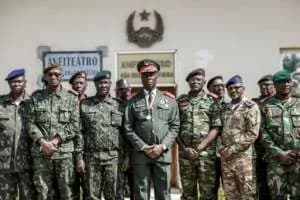
Tanzania is navigating a period of significant political uncertainty following the historic and voluntary resignation of Vice President Emmanuel Nchimbi. Effective September 4, Nchimbi’s departure marks the first time a sitting vice president has stepped down since the country achieved independence in 1964. Citing a commitment to President Samia Suluhu Hassan’s vision for administrative change, Nchimbi’s exit comes amid growing concerns over media freedom and the legitimacy of recent elections. President Hassan is now tasked with appointing a successor as critics warn of a potential slide back into authoritarian practices, a shadow that has loomed over the administration following the suspension of critical news outlets and crackdowns on dissent. Meanwhile, in West Africa, Nigerian President Bola Tinubu has ordered an immediate military manhunt and rescue operation following a devastating mass kidnapping in Niger State. Reports indicate that approximately 600 people were abducted during a coordinated attack on a mosque, an incident that also claimed at least 30 lives. The scale of this abduction has exposed deep-seated security failings in the region, prompting an increase in cross-border flight as citizens seek safety in neighboring Benin. This security crisis in Nigeria mirrors a horrific escalation of violence in Haiti, where the United Nations reports that 47 people were killed and over 50 kidnapped in Kenscoff. Armed gangs, which now control 70% of Port-au-Prince, carried out executions inside a church compound, underscoring the deteriorating global security landscape. Across the continent, other leaders are moving to consolidate or transition power. In Uganda, military chief Muhoozi Kainerugaba has officially declared his intention to run for the presidency in 2031, signaling a clear succession plan for his father, President Yoweri Museveni. This announcement coincides with the dropping of corruption investigations into former Speaker of the House Anita Among. Simultaneously, Guinea-Bissau is holding a controversial referendum to transition from a parliamentary to a presidential system, which would grant the president the authority to dismiss the prime minister and dissolve parliament. These moves toward centralized authority are echoed in Central Asia, where Kazakh President Kassym-Jomart Tokayev has solidified his rule after his Adilet party secured over 71% of the vote in a new unicameral parliamentary election that notably lacked any opposition candidates. These widespread political shifts highlight a growing tension between the consolidation of executive power and the maintenance of democratic pluralism and public safety. Whether through constitutional referendums in Guinea-Bissau, legislative restructuring in Kazakhstan, or military purges in Guinea—where President Mamadi Doumbouya recently dismissed 173 soldiers—the global political landscape is being reshaped by leaders seeking greater control amidst internal and external threats. As the international community and organizations like the United Nations call for intervention in crises like those in Haiti and Nigeria, the focus remains on whether these administrative changes will lead to greater stability or further erode human rights and judicial independence across these nations.

