••
President Mahama Outlines 2027 Budget Priorities Focused on Job Creation, Infrastructure, and Local Processing
•3 min read•13 sources
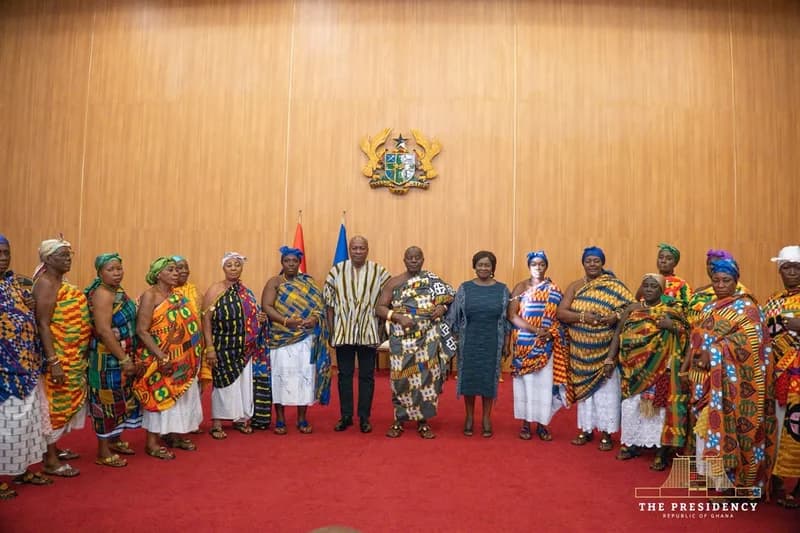
President John Dramani Mahama has announced that Ghana’s 2027 Budget Statement will prioritize nine critical sectors designed to accelerate job creation and economic stability. During a consultative meeting with the Ahafo Regional House of Chiefs, the President revealed plans for a proposed annual investment of two billion dollars in private sector-led initiatives. A central pillar of this strategy includes a policy to process 50% of Ghana's cocoa and minerals locally, a move supported by the International Finance Corporation (IFC) to retain value within the domestic economy. President Mahama also confirmed a $300 million World Bank package aimed at phasing out the double-track system in Senior High Schools by 2027, highlighting a comprehensive approach to both economic and educational reform.
In tandem with these budgetary goals, the administration is intensifying its focus on infrastructure accountability and quality. The Accra-Kumasi Expressway has been designated as the first major project to undergo scrutiny by the Value for Money Office (VfMO) under the Ministry of Finance. This move aligns with a broader review of the Ghana Infrastructure Plan (GIP) by the National Development Planning Commission (NDPC). Complementing these efforts, the Minister of Works and Housing, Ahmed Ibrahim, has issued a stern directive to indigenous contractors to prioritize quality and employ qualified engineers to prevent building collapses. He emphasized that future government contracts would increasingly require strict adherence to professional engineering standards to ensure public safety and project durability.
Decentralization and local development remain at the forefront of the government's agenda. President Mahama has urged traditional leaders to take a more active role in district development, proposing that 80% of the District Assemblies Common Fund (DACF) be allocated directly to districts to improve local financing. Specific regional gains are already underway, such as the '2026 Big Push' rural electrification project, which commenced in September 2026 to connect eight underserved communities in the Ho West Constituency. Similarly, in Builsa South, MP Clement Apaak has allocated GH₵370,000 for emergency road rehabilitation, demonstrating a localized commitment to infrastructure maintenance that supports the President's national vision.
As the government navigates these complex development goals, voices from the scientific and regulatory sectors are calling for sustained consistency. Professor Kwabena Frimpong-Boateng, former Minister of Environment, Science and Technology, has advocated for a national development plan that transcends political cycles to prevent the 'roundabout' effect of disrupted programs. Meanwhile, the Ghana Civil Aviation Authority (GCAA) is modernizing oversight through new regulatory frameworks for drone technology, reflecting a transition toward high-tech agricultural and medical logistics. Together, these initiatives signal a concerted effort by the Mahama administration to pair large-scale economic planning with institutional reform and local empowerment.
Related topic
John Mahama: Latest News & Updates →

