••
President Mahama Announces $2 Billion Annual Investment in 2027 Budget to Drive Job Creation Across Nine Key Sectors
•2 min read•4 sources
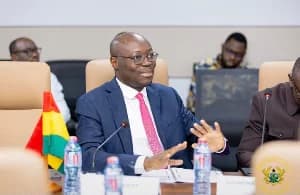
President John Dramani Mahama has announced that the upcoming 2027 Budget Statement and Economic Policy will center on nine critical sectors designed to accelerate job creation across Ghana. Speaking during a meeting with the Ahafo Regional House of Chiefs, the President revealed that the government plans to allocate approximately $2 billion annually to these priority areas. He emphasized that the initiative will be primarily driven by the private sector rather than government-operated entities, marking a strategic shift toward market-led employment generation. Detailed specifics of this economic framework are expected to be unveiled by the Finance Minister when the budget is formally presented to Parliament in November.
Preparations for the fiscal policy are already well underway at the Ministry of Finance, where ongoing budget hearings are being held this week. Sector ministers and senior officials are currently convening to outline their specific resource requirements and program goals for the 2027 fiscal year. These consultations aim to ensure that every ministry’s individual needs are aligned with the broader national strategy of economic revitalization and infrastructure development. The President has called for the support of traditional authorities to facilitate the implementation of these programs at the local level, stressing the importance of community involvement in achieving national targets.
In tandem with the government's planning, civil society organizations are advocating for more inclusive fiscal policies. The Network for Women's Rights (NETRIGHT) has issued a strong call for the 2027 budget to be gender-responsive, moving beyond what they describe as "token interventions." At a public forum in Accra, Executive Director Patricia Blankson Akakpo argued that despite existing social programs, a lack of rigorous gender analysis often undermines the effectiveness of resource allocation. NETRIGHT is urging the government to utilize gender-disaggregated data to ensure the budget addresses the specific needs of women and marginalized groups, demanding an evidence-based approach to inclusive development.
As the November presentation approaches, the 2027 Budget is shaping up to be a pivotal document for the Mahama administration’s economic agenda. By combining large-scale capital investment in job-creating sectors with a reliance on private sector efficiency, the government aims to address the country's employment challenges. The integration of gender-responsive budgeting and the active participation of traditional leaders will likely be key indicators of how successfully this policy can translate into broad-based prosperity for all Ghanaians.
Related topic
John Mahama: Latest News & Updates →

