••
PLO Lumumba and Speaker Alban Bagbin Lead Calls for African Economic Sovereignty and Diaspora Investment
•2 min read•3 sources
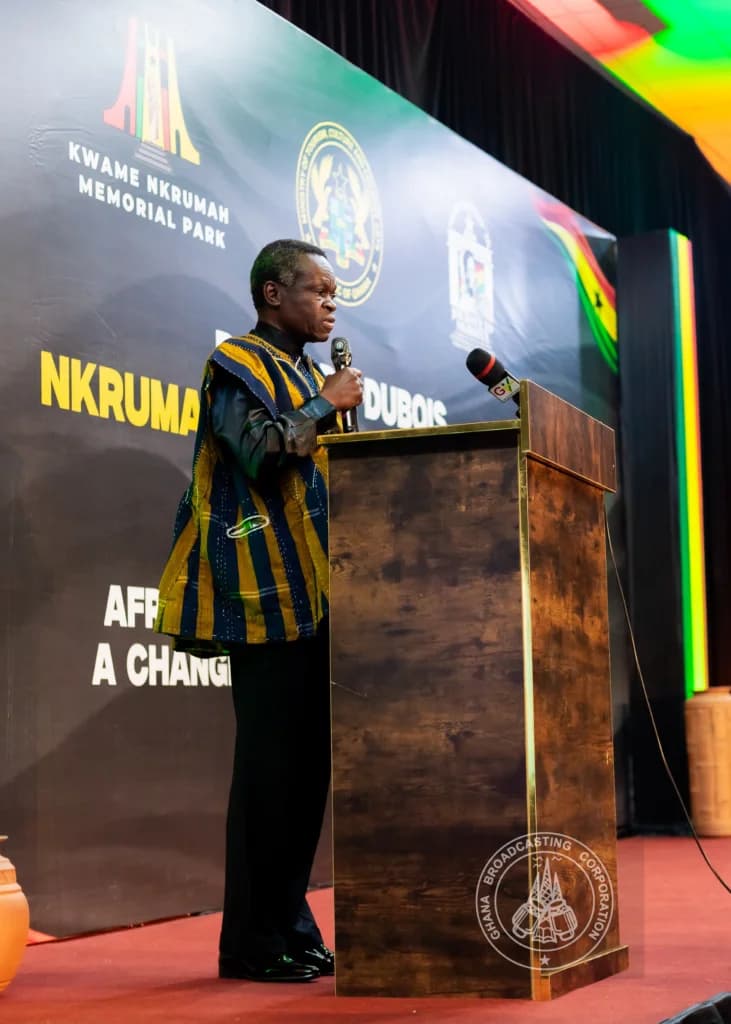
Prominent African voices and government officials are calling for a fundamental shift in the continent’s economic strategy, moving away from foreign dependency toward self-reliance and strategic diaspora engagement. During the 2026 Padmore-Dubois Nkrumah Memorial Lecture in Accra, Professor PLO Lumumba delivered a pointed critique of Africa's current economic state, arguing that the continent remains under the subjugation of Western financial institutions. Lumumba urged African leaders to return to the vision of Kwame Nkrumah, emphasizing that true independence can only be achieved through industrialization, internal trade, and a definitive break from the policies imposed by external powers.
This call for ideological and economic autonomy is being matched by practical demands for a new type of engagement with the African diaspora. Speaker of Parliament Alban S. K. Bagbin, addressing the Council of Ewe Associations of North America (CEANA) in Washington, D.C., encouraged Ghanaians abroad to transition from sending traditional remittances to developing sustainable investment platforms. Bagbin highlighted the need for the diaspora to utilize their cultural networks to foster economic unity and create long-term business opportunities. Supporting this view, Bank of Ghana officials have noted that current economic stabilization efforts provide a unique opportunity for the diaspora to move capital into structured, long-term ventures that drive national development.
Parallel to these efforts is a growing emphasis on rigorous internal governance and the efficient management of public resources. At a recent financial management conference in Accra, officials including Foreign Affairs Minister Samuel Okudzeto Ablakwa stressed that public financial management must ensure "value for money" to translate resources into better public services. The consensus among participants was that Africa needs capable institutions and skilled professionals to implement international accounting standards effectively. This internal professionalization is seen as a necessary foundation for the broader goal of continental economic independence.
Ultimately, these combined perspectives suggest a unified strategy for Africa’s future: a three-pronged approach involving ideological self-reliance, strategic investment from the diaspora, and transparent financial governance. By addressing both the external pressures of global finance and the internal requirements of professional management, leaders believe the continent can reclaim its economic sovereignty. The recurring theme across these addresses is that the path to prosperity lies in honoring foundational Pan-African ideals through modern, disciplined economic practices.

