••
Lands Commission launches Strategic Land Administration Reform Project
•2 min read•3 sources
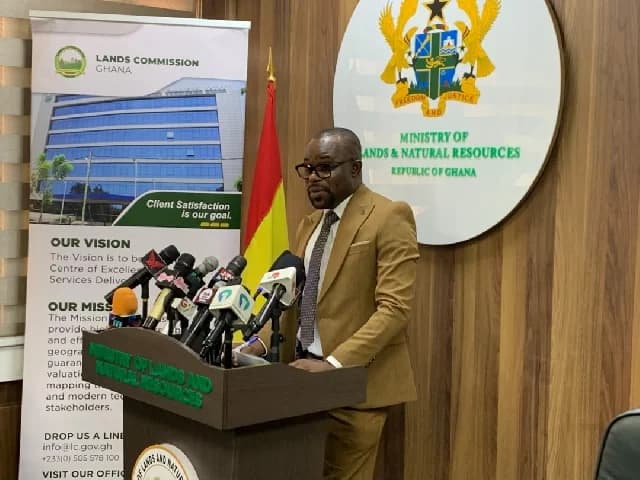
The Lands Commission has officially launched the Strategic Land Administration Reform Project (SLAP), an ambitious initiative designed to overhaul Ghana’s land management system through comprehensive digitisation and decentralisation. The project seeks to address long-standing challenges in the sector, including fragmented operations, manual record-keeping, and slow service delivery. At the core of the reform is a commitment to digitise the nation’s land records, of which only 10 per cent are currently in a digital format. This transformation aims to streamline processes and create a more transparent environment for land transactions.
According to the Commission's leadership, including Executive Secretary Professor Anthony Owusu-Ansah and Surv. Jones Ofori-Boadu, the project comprises eight critical components. These include mapping the entire country and establishing a National Spatial Data Infrastructure to facilitate seamless data sharing across government agencies. To enhance public access, the Commission is also establishing 36 new district offices. These offices, many of which are currently undergoing renovations to facilitate immediate operations, are intended to bring land administration services closer to local communities and reduce the bureaucratic bottlenecks typically associated with centralised regional offices.
The reforms are backed by significant legislative and fiscal progress. Preparations for a Legislative Instrument to support the Land Act, 2020 (Act 1036) are well advanced, with a revised draft currently before Parliament for expected approval by the end of 2026. On the financial front, the Commission’s modernisation efforts are already yielding measurable results; as of August 2026, the body had collected GH₵40.7 million in ground rent, surpassing its interim targets and moving toward a year-end goal of GH₵45 million.
Moving forward, the Commission is leveraging technology through the Enterprise Land Information System (ELIS) to enable online land searches and has made progress in establishing Continuous Operating Reference Stations to improve surveying accuracy. Looking ahead to 2027, the Commission plans to implement a new National Land Policy to further consolidate these gains. These integrated efforts are expected to strengthen revenue collection, improve administrative efficiency, and ultimately restore public confidence in Ghana's land management systems as part of the broader national development agenda.
classfmonline.com
PrimarypoliticsLands Commission targets digital transformation through Strategic Land Reform Project
gbcghanaonline.com
politicsLands Commission regulations for Land Act near parliamentary approval
classfmonline.com
politicsLands Commission projects GH¢45m ground rent target & new national land policy for 2027

