••
KNUST Student Team "Husker AI" Wins 2026 Pan African AI Summit Hackathon for Cocoa Waste Innovation
•2 min read•1 source
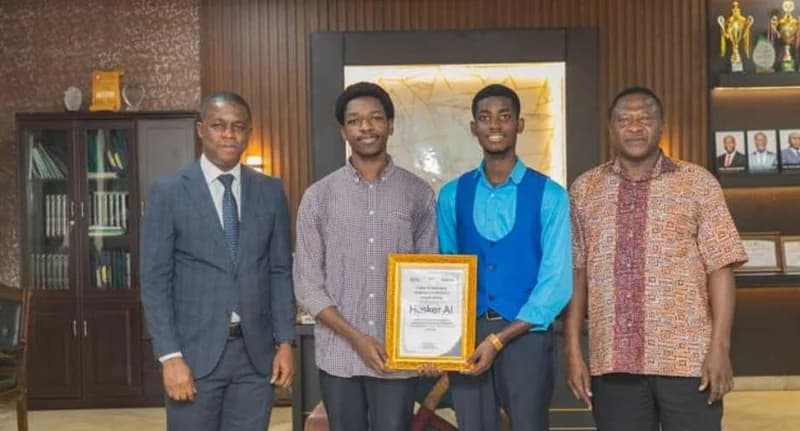
A student-led team from Kwame Nkrumah University of Science and Technology (KNUST) has emerged victorious at the 2026 Pan African AI Summit Hack-AI-Thon. The team, known as Husker AI, claimed the top prize for their innovative artificial intelligence solution designed to transform discarded cocoa pod husks into a viable source of income for Ghanaian farmers. Outperforming a competitive field of over 200 applicants from across the continent, the group secured a $1,000 cash prize and exclusive mentorship opportunities to further develop their technology during the event held on September 22–23, 2026.
The winning project addresses a long-standing challenge in the cocoa industry: the management of agricultural waste. Husker AI's platform utilizes AI to assess the quality and potential market value of cocoa husks, which are typically discarded after the beans are harvested. By connecting smallholder farmers with industrial buyers who can repurpose these husks into value-added products, the team aims to create a circular economy within the agricultural sector. The project was developed by a five-member team comprising Frank Agyare, Caleb Antwi, Wilhelmina Adjah, Elijah Ayinomba, and Joseph Amankwaah.
The Hack-AI-Thon served as a centerpiece of the broader AI & Innovation Summit, which sought to highlight groundbreaking technological advancements in Africa. The competition's rigorous selection process narrowed down hundreds of entries to just five finalists, who presented their prototypes to a panel of industry experts. The judges praised Husker AI for its practical application and its focus on accessibility for smallholder farmers, ensuring that the benefits of high-tech innovation can reach the grassroots level of Ghana's economy.
Looking ahead, the Husker AI team intends to use their prize money and mentorship to transition their concept into a real-world application. As Ghana remains one of the world's leading cocoa producers, the potential impact of such technology is significant, offering a path to diversify farmer income and reduce environmental waste. This victory underscores the growing role of Ghanaian youth and academic institutions in driving technological solutions for local industrial challenges, positioning AI as a critical tool for national economic development.

