••
Ghana Faces Environmental Crisis as Hohoe Floods Displace Thousands Amidst Warnings of Strengthening El Niño
•3 min read•9 sources
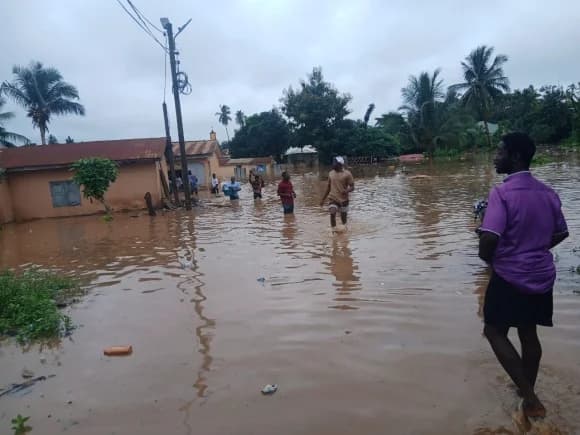
Ghana is currently navigating a critical period of environmental and climate challenges as the nation deals with the immediate aftermath of devastating floods in the Hohoe municipality while preparing for a prolonged El Niño cycle. The National Disaster Management Organisation (NADMO) has reported that while floodwaters are receding, the disaster has left approximately 5,336 people homeless across 10 communities. The flooding caused significant damage to 400 homes and 4,218 households, alongside heavy losses in the poultry and agricultural sectors. This localized crisis aligns with urgent warnings from climate experts, including Dr. Jeffrey N. A. Aryee of KNUST, who cautions that a strengthening El Niño phenomenon in the tropical Pacific is expected to influence global weather patterns and Ghana's rainfall distribution through early 2027.
In response to these threats, local leaders and environmental organizations are intensifying efforts to promote community-led resilience. In the Volta Region, Adaklu District Chief Executive Jerry Yao Ameko has declared environmental protection non-negotiable, urging the strict enforcement of sanitation bylaws to protect vital waterways and support President John Mahama's national health initiatives. Similarly, in Accra, the Africa Centre for Nature-Based Climate Action (AC4NCA) recently spearheaded a major beach clean-up at Chorkor. Supported by the Pulitzer Center and Jospong Group, the initiative focused on tackling marine pollution through direct community engagement, with AC4NCA Acting Executive Secretary Juliet Osei-Wusu emphasizing that local involvement is crucial for nature-based climate solutions.
Beyond emergency response and sanitation, there is a growing movement to integrate environmental stewardship into Ghana's economic framework. The 14th Ghana Garden and Flower Show, organized by Stratcomm Africa, recently concluded with a call to transform horticulture and floriculture into viable economic engines. Keynote speakers at the event highlighted the potential for urban green spaces to not only mitigate climate impacts but also drive sustainable business growth. This economic perspective is complemented by a call for intellectual shifts; Samuel Ato Duncan of the Centre of Awareness Global Peace Mission has advocated for a focus on "Real Intelligence" (RI)—centered on human consciousness and values—as a necessary tool to address global conflicts and environmental challenges that Artificial Intelligence alone cannot solve.
As the strengthening El Niño threatens to bring increased temperatures and rainfall variability, the collective focus remains on preparedness and proactive adaptation. Experts urge that agricultural advisories, water resource management, and disaster prevention strategies must be integrated into national planning to mitigate potential food security risks. The convergence of grassroots actions in Chorkor, policy enforcement in Adaklu, and the economic vision of the horticulture sector suggests a multi-faceted national strategy. Moving forward, the success of these initiatives will depend on sustained collaboration between the government, scientific researchers, and local communities to ensure Ghana's resilience against both immediate weather extremes and long-term climate shifts.
Related topic
John Mahama: Latest News & Updates →

