••
GWJN demands probe into $235m Teshie-Nungua desalination ruling
•2 min read•2 sources
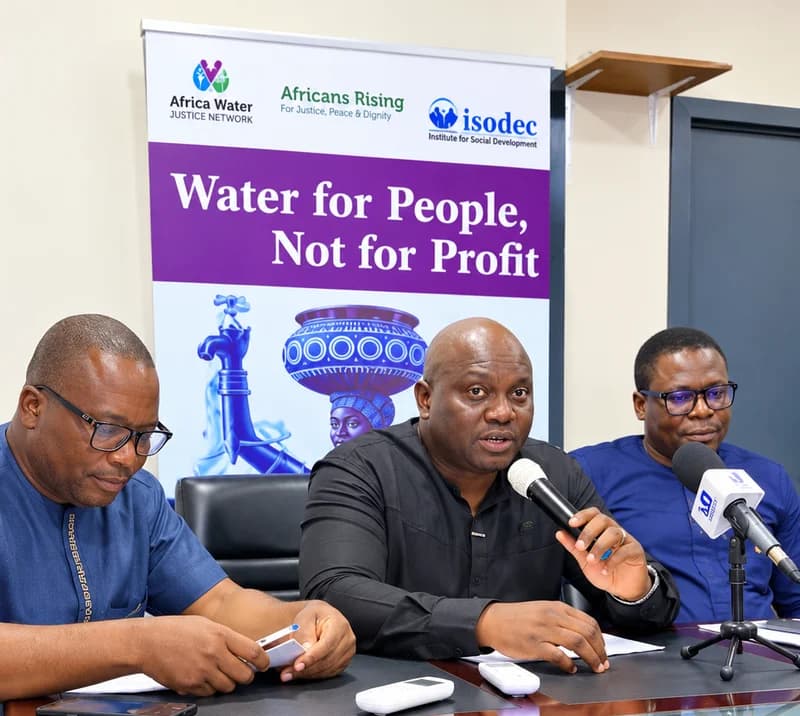
The Ghana Water Justice Network (GWJN) has called on the government to launch an independent investigation into the Teshie-Nungua Desalination Plant contract after a recent arbitration ruling imposed a $235 million liability on the state. Speaking during a press briefing for the Africa Week of Action Against Water Privatisation, GWJN Chairman Geoffrey Ocansey warned that the financial fallout from the flawed agreement must not be passed on to Ghanaian consumers through increased water tariffs. The network is also demanding an immediate halt to all further water privatisation projects and high-risk Public-Private Partnerships (PPPs) until a comprehensive review of the sector is completed.
The desalination plant, which was designed to provide essential water services to parts of Accra, has been at the centre of a protracted dispute between Ghana Water Limited (GWL) and the private partners involved in the project. The facility was shut down in October 2025 following disagreements over maintenance and the terms of the water purchase agreement. The subsequent $235 million arbitration award to the project's private companies reflects the significant financial penalties incurred by the Republic of Ghana. GWJN argues that the project failed to deliver on its contracted water supply expectations despite substantial government backing, making the current debt a major burden on taxpayers.
Geoffrey Ocansey, who also serves as the Executive Director of Revenue Mobilization Africa, emphasised that water should be treated as a public good and a human right rather than a commodity for profit. The GWJN highlighted that transparency is severely lacking regarding the financial assessments and operational performance of the Teshie-Nungua plant. The group is particularly concerned about potential plans for the government to acquire the plant, urging that any such move must be preceded by a rigorous independent analysis to prevent further financial losses. They noted that the current situation underscores the dangers of pursuing privatisation without adequate scrutiny or community participation.
The network concluded its appeal by advocating for a shift toward increased public investment in the water sector. By prioritizing public management over profit-driven models, the GWJN believes the state can ensure that water remains both affordable and accessible to all citizens. The call for an independent policy review serves as a challenge to the government to safeguard national resources and protect vulnerable communities from the economic consequences of failed infrastructure contracts.
gbcghanaonline.com
Primaryenergy and infrastructureGWJN calls for suspension of water privatisation over US$235m desalination liability
classfmonline.com
energy and infrastructureDon't make 'flawed water contracts' Ghanaians' burden by imposing higher water tariffs - Ghana Water Justice Network warns Govt

