••
Guinea-Bissau Leads ECOWAS Community Health Policy Pilot with €1.5m Laboratory Infrastructure Boost
•2 min read•2 sources
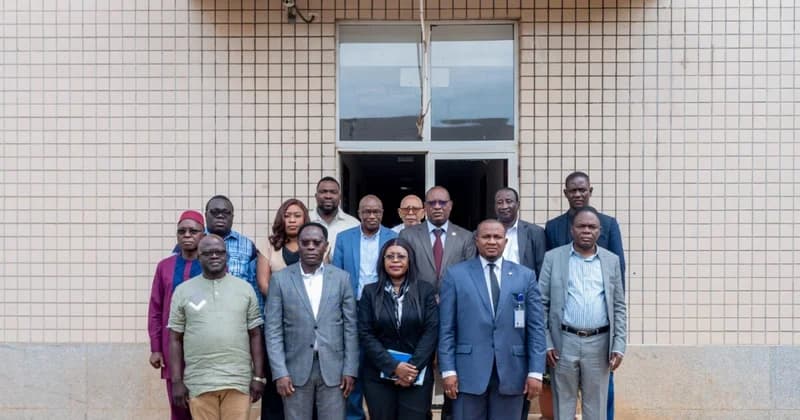
Guinea-Bissau has emerged as a focal point for West African health reform as the country begins piloting a new ECOWAS regional community health policy, supported by a significant infusion of medical technology. In a series of high-level engagements that began on August 18, 2026, the West African Health Organisation (WAHO) initiated discussions with national authorities to establish Guinea-Bissau as the lead nation for this regional framework. The initiative aims to create a blueprint for community-based health interventions that can eventually be scaled across other ECOWAS member states.
To support the technical demands of this new policy, WAHO officially handed over €1.5 million worth of state-of-the-art laboratory equipment to Guinea-Bissau’s National Public Health Laboratory on August 19. This investment, funded by the German government through the PROALAB project, is specifically designed to enhance the country’s disease detection and epidemiological surveillance capabilities. During the ceremony, Guinea-Bissau’s Minister of Public Health, Commodore Dr. Quinhin Nantote, and WAHO Director General, Dr. Melchior Athanase Joël C. Aïssi, emphasized that this infrastructure is critical for the country to effectively address emerging public health threats.
The implementation of the new regional policy adopts a unique multisectoral approach, extending beyond clinical care to include the Ministry of Agriculture. This collaborative model recognizes the intersection of animal and human health in disease prevention. Dr. Aïssi’s mission in Bissau focused on securing high-level political commitment and ensuring that the institutional needs for the policy’s execution are met. The donation of laboratory equipment serves as a foundational step in providing the technical readiness required for such an ambitious regional health mandate.
As the mission continues through August 21 with a series of technical workshops, the focus remains on strengthening Guinea-Bissau’s ownership of the policy. WAHO’s strategy is to move beyond external aid toward sustainable, member-state-led health governance. The successful integration of the €1.5 million equipment suite with the new community health protocols is expected to provide valuable lessons for the rest of the ECOWAS bloc, potentially transforming how regional health crises are managed and monitored across West Africa.
