••
GRA Seizes Illegal Firearms as Protests Erupt Over Fatal Mining Site Shooting in Akyem Hemang
•3 min read•9 sources
Ghana’s security landscape is under intense scrutiny following a major weapons seizure at the Golden Jubilee Terminal and a series of violent incidents that have sparked public outrage. On September 25, 2026, the Ghana Revenue Authority (GRA) intercepted 610 rounds of ammunition, an assault rifle, and two pistols concealed within a consignment arriving from the United States. Deputy Commissioner Florence Asante emphasized that the GRA has since intensified examination protocols, urging importers to strictly adhere to permit requirements for restricted items to avoid unintentional involvement in illegal arms trafficking.
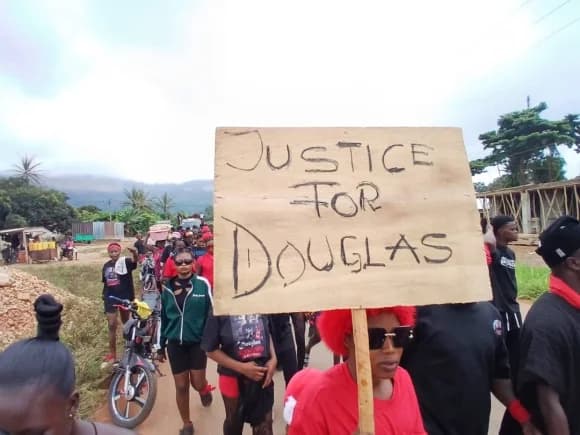
In the Eastern Region, residents of Akyem Hemang took to the streets on September 29 to demand justice for 29-year-old Douglas Acheampong, who was allegedly shot and killed by military personnel at an illegal mining site on August 26. Protesters, adorned in red armbands, claimed Acheampong was shot in the back while fleeing security forces. During the demonstration, Assembly Member Richmond Darko and local residents presented a petition to the District Chief Executive, Mercy Korang, who assured the community that their grievances would be forwarded to President John Mahama for immediate attention and investigation.
The judicial system has also responded firmly to a rise in violent robberies and local disputes. In Adenta, a 22-year-old Bolt driver and motor mechanic, Emmanuel Kofi Mensah, was sentenced to 25 years in hard labor for a brutal cutlass attack on a beautician. Mensah robbed the victim of valuables exceeding GH₵24,700 after locking her in his vehicle. Similarly, in the Ashanti Region, the Nsuta Circuit Court remanded 74-year-old trader Kofi Antwi Moosi into custody on October 1 following a separate cutlass attack, as authorities signal a zero-tolerance approach to violent crime.
Community safety concerns have further escalated following the murder of 85-year-old landlady Maame Asatewaa in Suminakese, Kwahu East, allegedly by a tenant. The incident led to a mob attack on a police vehicle, reflecting growing local frustration with perceived security lapses. Meanwhile, the Ghana Police Service has moved to calm fears in Teshie after Member of Parliament Kwame Asare Obeng (A Plus) labeled the area the most dangerous in Ghana. Chief Inspector Francis Larbi, Teshie’s Station Officer, disputed this characterization, maintaining that official data does not classify the community as a high-risk zone despite recent high-profile crimes.
These combined events have placed significant pressure on the administration of President John Mahama to address both the influx of illegal weaponry and the conduct of security forces in mining areas. As investigations continue into the Akyem Hemang shooting and the port seizure, civil society groups are calling for enhanced community policing and more transparent accountability mechanisms to restore public confidence in national security.
Related topic
Ghana Customs Recruitment: Latest News & Updates →

