••
GoldBod Generates Record $1.87 Billion in September, Exceeding Targets and Strengthening National Reserves
•3 min read•25 sources
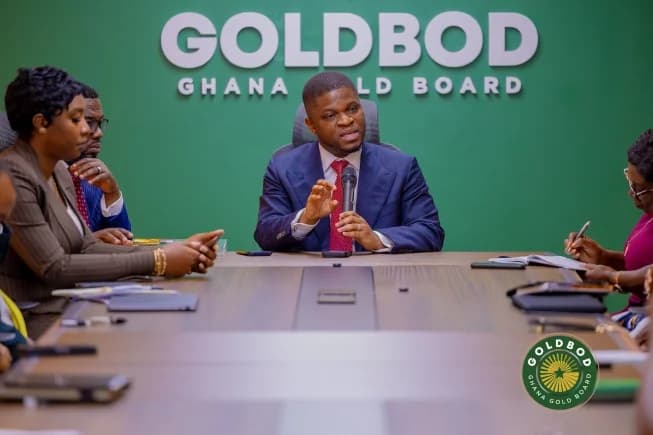
The Ghana Gold Board (GoldBod) achieved a significant milestone in September 2026, generating $1.871 billion in foreign exchange from artisanal and small-scale mining (ASM) operations. This performance exceeded the board’s monthly target of $1.4 billion by $471 million, representing 134% of its goal. The surge in revenue marks a notable increase from August, when the board generated $1.315 billion. Of the total September receipts, $701.3 million was sold to authorized commercial banks to stabilize the local market, while $1.170 billion was transferred to the Bank of Ghana to bolster national reserves under the Ghana Accelerated National Reserves Accumulation Policy (GANRAP).
This robust performance comes at a critical time for the Ghanaian economy, as the cedi recorded a 10.76% depreciation by the end of September, trading at GH¢11.71 per US dollar. In response to these significant inflows, the Bank of Ghana announced it will not undertake a separate foreign exchange intermediation program in October 2026, opting instead to rely on GoldBod’s revised arrangements. For October, GoldBod has set a foreign exchange target of $1.5 billion, with $1 billion earmarked for commercial banks and $500 million for central bank reserves. Effective immediately this month, GoldBod will take full responsibility for foreign exchange intermediation related to gold-derived flows, a shift intended to enhance transparency and regulatory compliance through its new Spot FX Sales Framework.
The Institute of Fiscal Policy Research (IFPR) has lauded these developments, suggesting that the consistent foreign exchange gains from gold trading could strengthen Ghana’s economic resilience and reduce its long-term reliance on International Monetary Fund (IMF) support. While the IFPR views this as a vital step toward financial independence, it cautioned that building reserves must be accompanied by disciplined fiscal management and economic diversification. Since its establishment in 2025, GoldBod has significantly formalized the domestic gold trade, capturing roughly 104 metric tonnes of gold and generating approximately $10.8 billion in total revenue during its first year of operation.
GoldBod’s success is also attracting international attention, with the Kyrgyz Republic expressing formal interest in replicating the Ghanaian model. During a recent high-level meeting between Kyrgyzstan’s Foreign Affairs Minister Jeenbek Kulubayev and GoldBod CEO Sammy Gyamfi, the two nations discussed technical cooperation to help formalize Kyrgyzstan's largely informal gold sector. Ghana’s Foreign Affairs Minister, Samuel Okudzeto Ablakwa, has proposed a structured framework agreement to facilitate knowledge-sharing and investment opportunities. As GoldBod transitions into its expanded role this October, the agency remains focused on increasing domestic refining capabilities to ensure more of the economic benefits of Ghana’s mineral wealth are retained within the country.
Live rates
Ghana gold price →

