••
Bank of Ghana Navigates Rising Operational Costs and Trade Pressures Amid Mixed Economic Recovery
•3 min read•10 sources
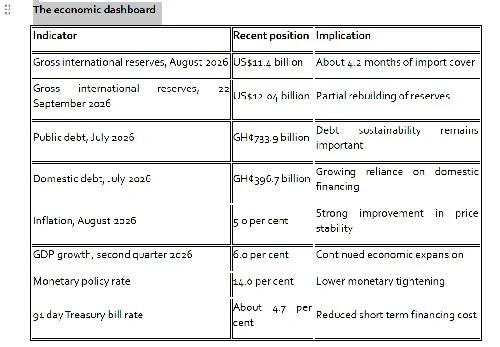
Ghana’s economic landscape in late 2026 presents a complex picture of recovering stability tempered by structural vulnerabilities and mounting operational pressures. While international reserves have rebounded to approximately $12.04 billion as of September 2026, the nation’s trade surplus experienced a sharp 70% contraction in the second quarter, falling to $1.3 billion. This decline was driven by a 47.5% surge in imports—largely due to a 54.1% increase in fuel prices—which overshadowed a modest 1.6% dip in exports. Despite gold remaining the primary export driver, accounting for 72.3% of total exports, the dependency on a few commodities highlights an urgent need for export diversification to protect against global market volatility.
Within the financial sector, the Bank of Ghana (BoG) is balancing internal fiscal management with broader monetary stability. The central bank’s personnel costs surged over 103% to GH₵3.29 billion between 2022 and 2025, driven by the recruitment of specialized technology and data analytics talent. Governor Dr. Johnson Asiama has indicated that while these expenditures now account for 63% of operating expenses, they are expected to moderate to below 40% in future cycles. On the policy front, the BoG has maintained its policy rate at 14% to combat inflation risks tied to energy and transport costs. However, analysts suggest the Monetary Policy Committee may consider rate cuts by the end of 2026 if fuel-related pressures continue to ease and the cedi stabilizes against major currencies like the US dollar, which recently traded at approximately GHS12.25 at forex bureaus.
Despite these stabilization efforts, the banking system faces persistent headwinds. S&P Global reports that the Non-Performing Loan (NPL) ratio remained high at 16.1% in mid-2026, a lingering effect of the domestic debt exchange program and government arrears. While the central bank maintains that the sector is stable, S&P notes that five local banks remain undercapitalized following the 2022 restructuring. These financial strains are mirrored in the state's fiscal performance; Ghana missed its 2025 non-oil tax revenue target by 4.1%. Tax experts attribute this shortfall to a weakening 'fiscal contract,' where public perceptions of corruption and the erosion of taxing rights through Double Taxation Agreements (DTAs) with partners like South Africa have hindered compliance and revenue mobilization.
Looking forward, the Ghanaian government and regulatory bodies are preparing for significant structural reforms to sustain growth. The International Monetary Fund (IMF) has called for more robust oversight of Ghana’s burgeoning cryptocurrency market, which is now the fifth-largest in sub-Saharan Africa. A new regulatory regime is slated for launch in December 2026 to enhance market integrity and consumer protection. As the administration under President John Mahama continues to navigate these challenges, the focus remains on translating macroeconomic indicators into 'kitchen table' benefits for households, ensuring that falling inflation and rising reserves eventually lead to job creation, affordable credit, and increased prosperity for the average citizen.
Related topic
John Mahama: Latest News & Updates →Live rates
Bank of Ghana policy rate →

