••
GNPC Identifies 1 Billion Barrels of Oil in Tano Basin as Eni and Vitol Secure New Exploration Agreements
•2 min read•6 sources
Ghana's petroleum sector is poised for a significant resurgence following the identification of over one billion barrels of oil and 2.5 trillion cubic feet of gas in the Tano Basin. This revelation by the Ghana National Petroleum Corporation (GNPC) coincides with the government signing two landmark Memoranda of Understanding (MoUs) with Eni Ghana and Vitol Upstream Tano Ltd for offshore blocks GH WB 3 and GH WB 8. These developments, occurring under the administration of President John Mahama, signal a strategic push to reverse recent declines in national oil production and bolster investor confidence through responsible exploration and investment in the upstream sector.
Speaking at the Esri User Conference West Africa 2026, Emmanuel Boadum Donkor, a Senior Geomatic Engineer at GNPC, detailed how the corporation utilized Geographic Information Systems (GIS) to uncover these "stranded resources." The GNPC’s analysis advocates for a hub-based development strategy, which leverages existing petroleum infrastructure to connect smaller, previously non-commercial discoveries. This approach is designed to significantly lower development costs compared to independent projects, making the extraction of these vast resources economically viable and accelerating the timeline for boosting Ghana's daily output.
The MoUs signed with Eni Ghana and Vitol cover approximately 2,100 square kilometers within the Tano Basin, further consolidating the presence of these energy giants in Ghanaian waters. Eni, which has been a major player in the country since 2009 through its Offshore Cape Three Points (OCTP) project, continues to lead investment efforts that have seen a marked increase throughout 2025. These agreements represent a commitment to high-standard upstream operations and are expected to catalyze further exploration activities as the government seeks to maximize the value of its offshore acreage.
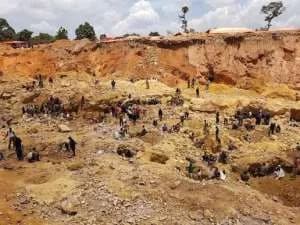
While the petroleum sector expands, the government is also tightening regulatory oversight in the mining industry to ensure legal compliance and security. The Minerals Commission recently ordered Nanlamtaaba Enterprise to immediately cease small-scale mining operations in the Gbane/Datoko area of the Talensi District. The directive followed the discovery that the company was operating without a valid license in an area reserved for large-scale mining since 2016. These parallel developments in the oil and mineral sectors underscore a broader national strategy to prioritize large-scale, regulated investment to drive Ghana's economic growth and ensure the sustainable management of its natural resources.
Related topic
John Mahama: Latest News & Updates →

