Anansi News
HomeBriefsAsk GhanaTopicsTools
•
•

Stay Informed

Get AI-curated news briefs from Ghana delivered to your inbox every morning. Free forever, no spam.

Explore

  • Home
  • Briefs
  • About

Categories

  • Politics
  • Business
  • Sports
  • Entertainment
  • Africa

Features

  • Analysis
  • Cedi Rates
  • Dollar to Cedi
  • Ghana Gold Price
  • BoG Policy Rate

Topics

  • Armed Forces Recruitment
  • WAEC Results & News
  • Nana Ama McBrown
  • NDC News
  • All Topics

Legal

  • Privacy Policy
  • Terms of Service
Anansi News© 2026. All rights reserved.
Made withfor Ghana
politics

Trump Administration Subpoenas NYT Reporters and GJA Issues Ultimatum to NDC Chairman Amid Threats to Press Freedom

11th July•3 min read•5 sources
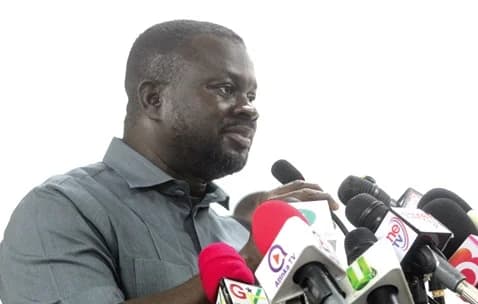
Albert Kwabena Dwumfour, President of the Ghana Journalists Association, speaking to journalists during the meeting. Picture: ESTHER ADJORKOR ADJEI
  1. Home
  2. /Politics
  3. /Trump Administration Subpoenas NYT Reporters and GJA Issues Ultimatum to NDC Chairman Amid Threats to Press Freedom

Global and local press freedom is facing significant scrutiny as journalists in the United States and Ghana grapple with legal and physical challenges. In a major escalation, the Trump administration has subpoenaed several New York Times reporters regarding their coverage of security vulnerabilities on a new presidential aircraft. Simultaneously, in Ghana, the Ghana Journalists Association (GJA) has issued a stern ultimatum to a high-ranking official of the National Democratic Congress (NDC) following a violent raid on a radio station. Both incidents highlight a growing tension between political authorities and the media’s role in ensuring government accountability.

In the United States, federal agents have served subpoenas to journalists as part of a grand jury investigation into the alleged leaking of classified information. The probe centers on reporting about security concerns involving a new Air Force One aircraft, valued at $400 million and reportedly gifted by Qatar. Following a NATO summit in Turkey, Secret Service officials advised the President to use an older plane due to concerns over the newer aircraft's security features, particularly amid rising tensions with Iran. While the Department of Justice stated that reporters are not the direct targets of the leak investigation, David McCraw, the Times’ top lawyer, condemned the move as an intimidation tactic aimed at suppressing reporting on national security and government operations.

Closer to home, the GJA has issued a seven-day ultimatum to Mr. Richard Asiedu, the NDC's Central Regional Chairman, demanding an apology for a June 2026 attack on Obaatanpa Radio. The incident involved an alleged violent shutdown of the station and physical assaults on staff members after the media house aired content critical of the chairman. The GJA has warned of potential legal action if their demands are not met, emphasizing that such aggression is a direct violation of the press freedom protections enshrined in Ghana’s constitution. The association also highlighted a worrying rise in Strategic Lawsuits Against Public Participation (SLAPPs) used to silence journalists through legal harassment.

These developments underscore a precarious environment for media practitioners across the globe. Whether through the use of federal subpoenas to identify confidential sources or the physical intimidation of local newsrooms by political figures, the pressure on the fourth estate continues to mount. Advocates for press freedom argue that these actions undermine the public’s right to transparent governance and institutional accountability. As the legal proceedings in the U.S. and the GJA’s ultimatum in Ghana unfold, the results will serve as critical indicators for the future of media independence and the safety of investigative journalists worldwide.

Our Take

From the Team

Coming Soon

Our team will add key insights, trends, and actionable takeaways to help you stay informed faster.

This story touches markets covered on Anansi Intelligence ↗.

Related topic

NDC (National Democratic Congress): Latest News →

More from politics

Continue exploring similar stories

High Court Dismisses Adjournment Plea in GH¢49.1m Trial of Former Signals Bureau Chief Kwadwo Adu-Boahene
politics|Yesterday

High Court Dismisses Adjournment Plea in GH¢49.1m Trial of Former Signals Bureau Chief Kwadwo Adu-Boahene

The Accra High Court has dismissed an application by the former Director-General of the National Signals Bureau (NSB), Kwadwo Adu-Boahene, to suspend his trial pending a decision from the Supreme Court. Presiding judge Justice Francis Apanga Achibonga ruled that the trial must proceed, rejecting a request by lead defense counsel Samuel Atta Akyea to wait for a Supreme Court review concerning the legality of criminal proceedings during the legal vacation. Adu-Boahene, along with several others including his wife, is facing 11 charges related to conspiracy, money laundering, and the alleged misappropriation of GH¢49.1 million intended for a national cybersecurity system. The defense had argued for an adjournment until at least September 2, 2026, when the apex court is expected to rule on a related injunction. Atta Akyea expressed disappointment with the High Court’s decision, suggesting that judicial prudence should have favored waiting for the Supreme Court's guidance. However, the Deputy Attorney-General, Dr. Justice Srem-Sai, vehemently opposed the delay, informing the court that the prosecution was on the verge of completing its case and had only one day of evidence remaining. Justice Achibonga concurred with the state, noting that existing Supreme Court rulings remain binding until overturned and that no specific rule compelled him to stay proceedings due to a pending review application. During the resumed proceedings, the court heard testimony from Frank Marshall Cromwell, a lead investigator from the Economic and Organised Crime Office (EOCO). Under cross-examination, Cromwell made a significant admission that investigators had not taken a statement from ISC Holdings Limited, the purported supplier of the cyber-defence system at the heart of the case. While Cromwell confirmed that the NSB acknowledged operating certain systems from ISC Holdings, he could not specify which systems were verified, raising questions from the defense about the thoroughness of the investigation into the delivery of the high-value equipment. Despite the ongoing legal friction, a moment of social cordiality was observed outside the courtroom as Kwadwo Adu-Boahene and Deputy Attorney-General Dr. Justice Srem-Sai were seen interacting at a burial service in Berekum for the father of the current NSB Director-General, Dr. George Atta Boateng. As the trial moves forward, all eyes remain on the Supreme Court’s upcoming ruling in September, which could still influence the procedural landscape of this high-profile corruption case. All accused persons have pleaded not guilty and remain on bail as the prosecution prepares to close its case.

Ghana Armed Forces Launch Exercise Resolute Synergy 2026 to Bolster National Security Readiness
politics|Yesterday

Ghana Armed Forces Launch Exercise Resolute Synergy 2026 to Bolster National Security Readiness

The Ghana Armed Forces (GAF) have officially commenced "Exercise Resolute Synergy 2026," a comprehensive three-day tabletop simulation designed to enhance the nation's military preparedness against emerging security threats. Running from August 25 to August 27, 2026, the exercise serves as a critical platform for testing the military's decision-making processes and command structures. By bringing together various military and state entities, the GAF aims to establish a unified and proactive approach to national defense in an increasingly unpredictable regional environment. Led by Brigadier General William Archibald Kwabiah, the exercise focuses on fostering high-level collaboration across multiple domains, including land, maritime, air, cyber, and information. General Kwabiah emphasized that the modern security landscape is characterized by complex, multi-dimensional challenges that require a highly coordinated response. The tabletop nature of the exercise allows senior officers and stakeholders to simulate crisis scenarios, identifying capability gaps and weaknesses that can be transformed into opportunities for institutional improvement and refined operational readiness. Chief of Defence Staff, Lt. Gen. William Agyapong, underscored the strategic significance of this initiative, noting that it comes at a time of rising security volatility within the West African sub-region. With the threat of violent extremism and other unconventional security pressures on the rise, the exercise is intended to reinforce operational effectiveness and institutional cohesion. Lt. Gen. Agyapong highlighted that "Exercise Resolute Synergy 2026" is a key component of the GAF’s broader strategy to develop a more cohesive and resilient military force capable of seamless inter-agency coordination. As the exercise concludes on August 27, the GAF plans to document the lessons learned and refine its command structures to better handle real-world security pressures. This focus on documentation ensures that the insights gained during the three-day simulation are integrated into future operational planning. Ultimately, the GAF seeks to ensure that all military services and national stakeholders are equipped with the necessary tools and collaborative frameworks to maintain peace and stability in Ghana amid evolving global threats.

President Bola Tinubu Orders Military Rescue After Mass Mosque Kidnapping in Niger State
politics|Yesterday

President Bola Tinubu Orders Military Rescue After Mass Mosque Kidnapping in Niger State

Nigerian President Bola Tinubu has directed the country's military and security agencies to launch an immediate rescue operation following a devastating mass kidnapping in Niger State. The attack, which targeted a mosque, resulted in the abduction of approximately 600 individuals, including women and children, and left at least 30 people dead. This incident is being described as one of the largest mass abductions in recent years, significantly escalating security concerns in Nigeria's north-central region and exposing critical vulnerabilities in the nation's protective infrastructure. The assault has sent shockwaves through the country, highlighting the intensifying threat posed by armed militant groups. While the exact number of abductees is currently being verified by officials, the sheer scale of the violence has already forced a significant number of residents to flee across the border into neighboring Benin. The presidency has condemned the attack in the strongest terms, with President Tinubu emphasizing the government's commitment to protecting its citizens and vowing to bring the perpetrators of this heinous act to justice. In a parallel development concerning national governance and accountability, the Department of State Services (DSS) has launched an investigation into the Nigeria Football Federation (NFF). The probe centers on the utilization of a N17 billion intervention fund previously approved by President Tinubu. These funds were specifically earmarked to address outstanding payments, including wages and bonuses, for players within Nigeria's national teams. The investigation marks a broader effort by the administration to ensure transparency in the management of state resources amidst the ongoing security crisis. These dual challenges—a massive security breach in Niger State and a high-stakes financial probe—place significant pressure on the Tinubu administration to deliver on its promises of stability and transparent governance. As the military intensifies its search for the hundreds of kidnapped citizens, the government remains under intense scrutiny regarding the recurring nature of mass abductions for ransom. The success of the current rescue operations and the integrity of the DSS investigation will likely serve as critical benchmarks for the administration's effectiveness in tackling both national insecurity and institutional corruption.

Tanzania's Vice-President Emmanuel Nchimbi Resigns in Unprecedented Move After 10 Months in Office
politics|Yesterday

Tanzania's Vice-President Emmanuel Nchimbi Resigns in Unprecedented Move After 10 Months in Office

In a historic and unexpected development, Tanzania’s Vice-President Emmanuel Nchimbi has announced his resignation from office, marking the first time a sitting vice-president has stepped down in the nation's history. The 54-year-old official, who was sworn into office less than 10 months ago following a disputed election, revealed his decision to retire from public life via a post on his Instagram account. The announcement, which included a letter addressed to President Samia Suluhu Hassan, has been confirmed by sources within both the vice-president's office and the presidency, signaling a major shift in the country's executive leadership. Nchimbi’s departure is reportedly set to take effect at the end of next week. In his communication, he cited a desire to respect President Samia Suluhu Hassan’s prerogative to implement changes within her administration. Before ascending to the vice-presidency, Nchimbi was a prominent figure within the ruling Chama Cha Mapinduzi (CCM) party and had held several high-ranking positions in the Tanzanian government. His resignation letter emphasized his commitment to the state, noting that he intends to continue contributing to the nation’s progress as a "good citizen" rather than a public official. The resignation comes amid a period of internal political discourse, during which Nchimbi had made several controversial public statements. Most notably, he had recently advocated for the drafting of a new constitution, explicitly linking constitutional reform to the protection of human rights and the improvement of national governance. These remarks were seen by some analysts as a departure from the standard rhetoric of the executive branch and may have contributed to the administrative "changes" referenced in his resignation. His brief tenure was also colored by the political tensions following the election that brought the current administration to power. As Tanzania prepares for the transition, the focus now shifts to President Samia Suluhu Hassan and her upcoming choice for a successor. The resignation of such a high-ranking official so early in the term raises questions about the internal dynamics of the CCM and the direction of the President’s reform agenda. For now, Nchimbi’s exit stands as a landmark event in East African politics, highlighting the evolving nature of political accountability and administrative restructuring in Tanzania.

All
africa
business
education
entertainment
health
news
politics
sports
technology